What Does Cold Press Mean on a Juicer?
A cold press juicer uses a slow auger to crush and press produce, separating juice from pulp. If you're asking what is a cold press juicer, think of it as a slow juicer whose method may suit greens and a quieter routine, with prep and cleanup to consider.
On this page (8 sections)
- What is a cold press juicer and what is it called?
- How does cold press juicing work?
- How is a cold press juicer different from a centrifugal juicer?
- How do you choose a cold press juicer for your kitchen?
- Which cold press juicer fits different routines?
- How should you set up and care for a cold press juicer?
- What common cold press juicer mistakes should you avoid?
- Which cold press juicer should you choose?
A cold press juicer slowly crushes and presses produce with an auger instead of shredding it with a fast spinning blade. If you're asking what is a cold press juicer, the short answer is a slow juicer that separates juice from pulp; the name describes the method, not a promise that the juice stays cold or retains every nutrient.
The slower process can suit leafy greens and people who prefer a more measured juicing routine. It can also involve more prep and cleanup than you expect, so compare those jobs with how often you'll make juice.
Start with our guide to cold press juicer machines for a look at common styles.
What is a cold press juicer and what is it called?
A cold press juicer is a machine that uses a slow auger to crush produce and press out juice. A screen or filter separates the liquid from the pulp as the auger moves ingredients through the machine.
The auger is a screw-shaped part. It draws in produce, presses it against the juicer's surfaces, and moves the leftover pulp toward an outlet.
Cold press juicers are also called masticating juicers or slow juicers. These names usually describe the same basic approach, though some models use two gears instead of one auger.
Learn more about how masticating juicers work and what changes with a twin-gear juicer.
How does cold press juicing work?
Cold press juicing works by feeding produce into a slow auger that crushes and presses it. Juice passes through a filter into a container, while the pulp leaves through a separate opening.
Prepare ingredients according to the machine's instructions and the size of its feed chute. Cut produce to fit, and feed it at the pace the maker recommends instead of forcing too much in at once.
The process may take longer than high-speed juicing. A slow auger can appeal if you often juice leafy greens or want less noise than a fast centrifugal machine, but it won't be the best match if speed is your main priority.
Does cold press mean no heat or oxidation?
No. “Cold press” describes a slower extraction style, not a process that removes all heat or oxidation.
An electric motor and friction can create some warmth while the machine runs. Low-speed designs are intended to reduce heat buildup compared with faster juicing, but the term alone doesn't promise a specific result in the glass.
Is cold-pressed juice always healthier?
No. The name alone doesn't prove one juice is healthier than another.
Ingredients and how soon you drink or store the juice matter too.
Juicing separates much of the insoluble pulp from the liquid. If keeping all the produce's fiber is a priority, a blender may fit better; compare the approaches in our cold press juicer vs. blender guide.
How is a cold press juicer different from a centrifugal juicer?
A cold press juicer uses a slow auger, while a centrifugal juicer uses a fast spinning blade and basket. That difference affects the pace and feel of the juicing routine.
Centrifugal machines can make juice quickly, but fast-spinning parts can create more noise. Slow juicers may take longer to feed and clean, so think about the time you can give both tasks.
Choose by the produce you plan to use, how much prep you accept, and whether you want juice quickly. Our cold press vs. centrifugal juicer comparison can help you weigh those trade-offs.
How do you choose a cold press juicer for your kitchen?
Choose a cold press juicer by matching its feed opening, cleanup needs, controls, and extra functions to your routine. Those details shape everyday use more than the label on the box.
- Check the feed opening and instructions. A smaller opening can mean cutting produce into shorter pieces before juicing.
- Decide how you like your juice. Pulp filters can offer a smoother or thicker drink, if the model includes that control.
- Plan for cleanup. Check which parts come off, which can go in the dishwasher, and which need hand washing.
- Consider extra functions only if you'll use them. Some models can also make foods such as nut butter, pasta, or sorbet.
- Measure your counter and storage space. Account for the machine, containers, and room to feed ingredients.
For a more detailed selection process, use our guide on how to choose a cold press juicer.
Which cold press juicer fits different routines?
The right model depends on what you want to make, how much counter space you have, and how you prefer to clean up. These three machines illustrate different priorities.
Who should choose the Ninja NeverClog JC151?
The Ninja NeverClog JC151 suits small kitchens and people who want pulp control. It comes with two filters for choosing less pulp or lots of pulp, plus Start/Stop and Reverse programs.
Its juice-contact parts are dishwasher safe, and the compact design is intended to fit under kitchen cabinets. Check your available counter and cabinet clearance before choosing a spot.
Skip it if you need one appliance to make a wider range of foods beyond juice.
Who will get more from the Omega All-in-One Cold Press Juicer?
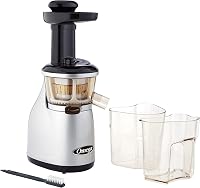
The Omega All-in-One suits people who want extra food prep functions alongside juice. Its triple-stage auger system also handles foods such as nut butter, baby food, pasta, and sorbet.
Omega describes its 80 RPM design as minimizing heat buildup and oxidation, and says it runs with less noise than high-speed juicers. Choose it if those extra uses have a place in your routine.
If you only want basic juicing, the added functions may not earn their storage space.
Is the Cuisinart CSJ-300 a good fit for cleanup-conscious buyers?
The Cuisinart CSJ-300 suits buyers who prefer a mesh-free filter. It slow-presses produce, nuts, and greens, and its removable parts are top-rack dishwasher safe.
Cuisinart's care instructions say hand wash only, so check each part's specific care needs before cleaning. Choose it if the mesh-free design is your priority and hand washing fits your routine.
Skip it if you want to put all removable parts in the dishwasher.
How should you set up and care for a cold press juicer?
Set up a cold press juicer by assembling its parts as instructed, placing the containers, and preparing produce to fit the feed chute. Start with the manual so each part is seated correctly before you add ingredients.
For smoother use, feed produce at a steady pace and alternate dense items with softer or leafy ingredients when the instructions allow. Use the reverse function if your model has one and ingredients begin to jam; don't force them through.
Clean juice-contact parts promptly after use so pulp doesn't dry on the filter or auger. Follow the care instructions for each part, since some are dishwasher safe and others need hand washing.
See our guide to cleaning a masticating juicer part by part.
What common cold press juicer mistakes should you avoid?
The most common mistakes are overfilling the feed chute, skipping produce prep, and leaving cleanup until later. Each can make the routine slower or harder than it needs to be.
- Don't push ingredients faster than the machine can process them. Follow its feeding instructions.
- Don't assume every fruit or vegetable can go in whole. Cut pieces to fit the chute.
- Don't put every part in the dishwasher without checking its care instructions.
- Don't buy extra functions based on a vague “all-in-one” idea. Choose them only if you expect to use them.
- Don't assume the word “cold” means juice will stay cold or keep all nutrients.
Which cold press juicer should you choose?
Choose the Ninja if you want pulp choices, a compact design, and dishwasher-safe juice-contact parts. Pick the Omega if you'll use its extra food functions, or the Cuisinart if the mesh-free filter matters and hand washing suits you.
A cold press juicer is a good fit when its slow auger style matches your produce and routine. If you want fast juice with less prep, compare centrifugal and cold press juicers before choosing.
Frequently asked questions
What is a cold press juicer?
A cold press juicer slowly crushes and presses produce with an auger, then separates the juice from the pulp. The term usually refers to a slow masticating juicer.
It describes the extraction method, not a promise that the juice contains no heat or keeps every nutrient.
Is a cold press juicer the same as a masticating juicer?
Usually, yes. A cold press juicer is commonly a slow masticating juicer that presses produce with an auger.
Some labels use the terms loosely, so check the mechanism.
A slow auger works differently from a fast spinning basket and blade.
Does cold press mean a juicer uses no heat?
No. Cold press describes slower extraction, which can reduce heat buildup compared with high-speed juicing.
The motor and friction can still create warmth.
The term doesn't promise a specific juice temperature or nutrient level.
Is a cold press juicer better than a centrifugal juicer?
It depends on your priorities. A cold press juicer uses a slow auger and can suit people who juice leafy greens or prefer less noise, while a centrifugal model uses a fast spinning blade and basket.
Compare prep time, cleanup, noise, and speed with your routine.