How to Choose a Cold Press Juicer
To learn how to choose a cold press juicer, match its feed style, cleanup and pulp controls to what you juice most. Then check its setup, dimensions and care instructions against your kitchen routine.
On this page (8 sections)
- How do you choose a cold press juicer for your routine?
- Which cold press juicer features make cleanup easier?
- How much room does a cold press juicer need?
- Which cold press juicer matches your priorities?
- How should you set up and use a cold press juicer?
- What common cold press juicer mistakes should you avoid?
- What should you check before buying a cold press juicer?
- How to choose a cold press juicer for your kitchen
To choose a cold press juicer, match how it feeds produce, how it cleans up and how much pulp control you want to the juice you make most. The right model should fit the ingredients you buy, the time you want to spend prepping and washing, and the counter space you have.
Think about your typical session before comparing machines. A glass made from a few ingredients has different needs from a larger recipe you want to load at once, and a removable filter matters more if cleanup is your main concern.
This guide compares those practical choices across four juicers. For a broader overview of machine styles, start with our cold press juicer machines buying guide.
How do you choose a cold press juicer for your routine?
Start with your usual produce and serving size, then compare feeding, pulp control, cleanup and storage. These factors shape your daily routine more than the “cold press” label by itself.
| Your priority | What to compare |
|---|---|
| Less chopping before juicing | Feed opening and ingredient instructions |
| Less repeated loading | Whether the juicer has a self-feeding hopper |
| Control over pulp texture | Included filters, strainers or pulp settings |
| Easier cleanup | Removable parts, filter design, brush and care instructions |
| A better counter fit | Published width, depth and height, plus room to use it |
Cold press juicers commonly use a slow auger to crush and press produce, but the designs and controls vary. Compare the details that affect your own use instead of assuming every machine handles ingredients or cleans the same way.
If you’re unsure what the term means, read what cold press means on a juicer. It explains why the label alone is not enough to predict how a particular model will suit your kitchen.
How to choose a cold press juicer by feed style
Choose a feed style that matches how much you want to prep and supervise. A self-feeding hopper can take a whole recipe at once, while a machine without one may suit you if you prefer to add ingredients as you go.
A wider opening may reduce cutting for some ingredients, but it does not mean every fruit or vegetable will fit whole. Check the feed opening and the maker’s instructions for the produce you plan to use, especially if you often juice firm or fibrous ingredients.
Our guide to juicer feed chute width explains this trade-off. The Nama J2 has a self-feeding hopper designed for loading a whole recipe, which suits someone who wants to do another kitchen task as it processes the ingredients.
How much pulp control do you need?
Choose a model with clear texture options if people in your household prefer different amounts of pulp. Interchangeable filters or strainers give you a direct way to change what goes into the glass.
The Ninja NeverClog JC151 comes with one filter for less pulp and another for lots of pulp. The Omega is designed to leave less pulp, while the Nama J2 includes juice strainers.
Decide whether you want to select the texture yourself or prefer a juicer designed around a smoother result. If pulp is not a concern, weigh feed style and cleanup more heavily.
Which cold press juicer features make cleanup easier?
Compare how parts come apart and how the maker says to wash them. A mesh-free filter, dishwasher-safe parts or a cleaning brush can affect the routine, but care directions vary between models.
The Cuisinart CSJ-300 has a mesh-free filter, and its removable parts are described as top-rack dishwasher safe. Its care instructions also say hand wash only, so check the directions for each part before choosing a cleaning method.
The Ninja’s juice-contact parts are dishwasher safe. The Nama J2 includes a cleaning brush and calls for hand washing, which may be a better fit if you don’t mind rinsing and scrubbing parts by hand.
The Omega has a no-drip tap and automatic pulp ejection. Those features help manage drips and separate pulp during juicing, though they do not replace cleaning the parts that contact produce.
Clean removable parts soon after juicing so pulp has less time to dry on them. For part-by-part guidance, see how to clean a masticating juicer.
How much room does a cold press juicer need?
Measure counter depth, width and cabinet clearance before choosing. Height can determine whether a juicer fits beneath upper cabinets, while the footprint matters if you plan to leave it out.
| Juicer | Dimensions (D x W x H) |
|---|---|
| Ninja NeverClog JC151 | 12.11 x 7.15 x 15.93 in |
| Cuisinart CSJ-300 | 6.97 x 10.24 x 18.27 in |
| Omega 43 RPM Compact Vertical Juicer | 9.14 x 15.67 x 9.49 in |
| Nama J2 | 9 x 9.8 x 17.7 in |
Measure where the juicer will sit and leave working room to add produce and remove the juice and pulp containers. Also consider where the parts will dry after cleaning.
If you plan to store the machine after each use, account for its separate parts and containers as well as the motor base. A narrow footprint does not tell you whether a full assembly will fit in a cabinet.
Which cold press juicer matches your priorities?
Choose the model that addresses your main daily concern, then check its other features against your routine. These four machines suit different preferences for pulp, filter design, spout control and feeding.
Ninja NeverClog JC151: choose between 2 pulp textures
The Ninja suits households that want to switch between less pulp and lots of pulp. Its two filters make that choice part of setup, rather than leaving you with one fixed texture.
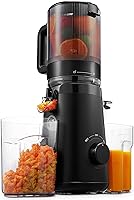
The Start/Stop and Reverse programs give you two simple controls, and the built-in anti-drip lever helps reduce spills when you pause to pour. Its juice jug holds 24 oz and its pulp container holds 36 oz.
Ninja says this model handles apples, carrots, celery and leafy greens. Its juice-contact parts are dishwasher safe, which suits someone who wants a simpler cleanup routine.
Choose it if adjustable pulp texture and dishwasher-safe juice-contact parts are priorities. Skip it if your first requirement is loading a whole recipe at once without feeding ingredients gradually.
Cuisinart CSJ-300: prioritize a mesh-free filter
The Cuisinart suits a buyer who wants a slow juicer with a mesh-free filter. Cuisinart describes it as suitable for fresh produce, nuts and greens, and it includes two collection bowls and a lid.
Its removable parts are described as top-rack dishwasher safe, though its care instructions also say hand wash only. That makes it important to check how each part should be cleaned instead of assuming the whole assembly is dishwasher safe.
At 18.27 in high, it is the tallest of these four machines. Measure your cabinet clearance before choosing it, especially if you want to store it assembled on the counter.
Choose it if filter design is a deciding factor. Skip it if you want clearly simple dishwasher care without checking instructions for individual parts.
Omega 43 RPM Compact Vertical Juicer: consider its spout features
The Omega suits someone who wants a no-drip tap and automatic pulp ejection. You can close the tap during juicing to mix ingredients at the spout, or close it after juicing to help prevent drips when removing a cup.
Omega says the juicer operates at 43 RPM and uses a dual-edge auger. An interlock must be engaged for the juicer to operate, so follow the assembly instructions before starting it.
Its published dimensions make it wider than the other machines here, so check counter width as well as height. It is a good match when the tap and pulp handling matter more than a narrow footprint.
Choose it if spout control and automatic pulp ejection suit your routine. Skip it if your counter is narrow or you want a self-feeding hopper.
Nama J2: load a recipe at once
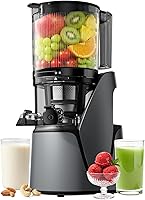
The Nama J2 suits a buyer who values self-feeding. Its hopper is designed to take a whole recipe, letting you step away to do another kitchen task while it processes the ingredients.
Nama says the J2 runs at 50 RPM. The included parts include juice containers, strainers and a cleaning brush, while the care instructions call for hand washing.
Its 17.7 in height needs a cabinet-clearance check. Also plan where to rinse, dry and store the removable pieces after use.
Choose it if loading a recipe at once matters more than dishwasher cleanup. Skip it if you prefer to feed ingredients gradually or want parts that can go in the dishwasher.
How should you set up and use a cold press juicer?
Set up the machine on a stable, dry counter and assemble it in the order shown in its instructions. A proper fit between the parts matters: the Omega, for example, has an interlock that must be engaged before it will run.
Before the first session, identify the juice and pulp outlets, collection containers, filters or strainers, and any controls. That quick check helps you avoid starting with a container in the wrong place or a part that has not been seated correctly.
Prep produce according to the maker’s guidance rather than assuming a wide opening accepts every ingredient whole. Feed ingredients at a steady pace if the machine calls for gradual loading, and use a self-feeding hopper as directed instead of forcing more produce into it.
For machines with a reverse control, use it according to the instructions if ingredients jam. The Ninja includes a Reverse program to help reduce jams, but avoid pushing produce harder when the auger slows or stops.
What common cold press juicer mistakes should you avoid?
The most common buying mistake is choosing by one headline feature and overlooking the daily routine around it. A self-feeding hopper may save repeated loading, but hand-wash care can still add cleanup time.
Other avoidable mistakes include:
- Skipping the measurement step: Check height beneath cabinets and width on the counter, then leave space to load produce and remove containers.
- Assuming all parts are dishwasher safe: Care directions may distinguish among parts, and some models call for hand washing.
- Expecting a wide opening to eliminate prep: Some produce still needs cutting, so check the maker’s instructions.
- Ignoring pulp preferences: If household members want different textures, choose filters that let you adjust the result.
- Waiting too long to rinse parts: Pulp can dry onto surfaces, making cleanup harder.
- Forcing ingredients when the machine slows: Follow the feed and reverse instructions for the model instead of applying extra pressure.
Choosing around your actual habits makes it easier to keep using the juicer. If you mainly want juice with minimal prep, prioritize how ingredients enter; if you dread cleanup, compare care directions before anything else.
What should you check before buying a cold press juicer?
Check feed instructions, care directions and machine dimensions for the exact model you are considering. Those details can rule out a poor fit even when its headline features sound appealing.
Use this checklist before you decide:
- List the produce you juice most often, including leafy greens or firm roots.
- Decide whether you want to add ingredients gradually or load a recipe at once.
- Choose the pulp texture you prefer and compare included filters or strainers.
- Read the care directions for every part that touches juice or pulp.
- Measure counter height, depth and width, including room for containers.
- Check assembly requirements, such as the Omega’s interlock.
- Decide where removable parts will dry and where the machine will be stored.
If you are comparing auger styles, our guide to triturating juicers explains how twin-gear machines differ from common single-auger designs. That distinction can help if you are considering a more specialized juicer.
How to choose a cold press juicer for your kitchen
Choose the Ninja if you want two pulp textures and dishwasher-safe juice-contact parts, the Cuisinart if a mesh-free filter is your priority, the Omega if its tap and pulp ejection fit your routine, or the Nama J2 if you want to load a whole recipe at once.
Then confirm that the juicer fits your counter and that its washing instructions work for you. For a wider comparison of machine types and buying factors, continue to our cold press juicer machines guide.
Frequently asked questions
What should I look for when choosing a cold press juicer?
Start with the produce you juice most, then compare feed style, pulp control, cleanup and counter fit. Check the maker’s care instructions and the machine’s dimensions before buying.
A self-feeding hopper can reduce repeated loading, while removable parts and a cleaning brush affect your cleanup routine.
Is a cold press juicer the same as a masticating juicer?
Cold press often describes a slow juicing approach, and many machines sold under that label use a masticating auger. Names vary by brand, so compare the actual mechanism and features instead of relying on the label alone.
Our guide to what a masticating juicer is explains how an auger-based design works.
Does a wider feed chute matter on a juicer?
A wider feed opening may reduce how much you need to cut produce before juicing, but it does not remove every prep step. Check the opening and the maker’s instructions for the ingredients you plan to use.
See why feed chute width matters for more on this trade-off.
Are cold press juicers difficult to clean?
Cleanup depends on the parts that contact juice and pulp, how they come apart and the maker’s care instructions. Some models have a mesh-free filter or dishwasher-safe parts, while others call for hand washing.
Compare those details with how soon you can clean after juicing.
Is a hands-free juicer worth choosing?
A self-feeding hopper can help if you want to load a recipe at once and do other kitchen tasks while the machine processes it. It may not matter if you prefer to add ingredients gradually or make small servings.
Consider hopper capacity, assembly and cleanup alongside the feed style.