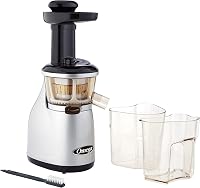
Cold Press vs Centrifugal Juicer: Which Fits Your Kitchen? (October 2026)
Choose a cold press juicer for slower pressing and pulp choices, or a centrifugal juicer for quick prep and a larger batch jug. Match the type to your usual produce, serving size and cleanup routine.
On this page (8 sections)
- Cold press juicer vs centrifugal: what changes?
- Which juicer fits a busy morning?
- Which style suits leafy greens and hard produce?
- How do batch size and pulp preferences compare?
- Which juicer is easier to clean?
- How should you set up and use a juicer?
- What mistakes can make the choice harder?
- Which juicer should you choose?
A cold press juicer fits slower pressing and pulp choices; a centrifugal juicer fits quick prep and larger batches. In this cold press juicer vs centrifugal comparison, choose by how much juice you make, what you juice most and how much prep and cleanup you want.
The Breville Juice Fountain Cold is a centrifugal model with a wide feed chute and large jug. The Ninja NeverClog and Cuisinart CSJ-300 are slow masticating juicers with different approaches to pulp and filter cleanup.
Cold press juicer vs centrifugal: what changes?
A centrifugal juicer prioritizes speed, while a cold press juicer presses produce with a slower auger. That basic difference affects how you feed ingredients and plan a juicing session.
The Breville has two speeds: high for dense fruit and hard vegetables, and low for leafy vegetables and soft fruit. Its 3 in chute accepts whole apples, carrots and oranges without pre-cutting.
The Ninja uses a low-speed auger and has Start/Stop and Reverse programs. Two pulp filters let you choose Less Pulp or Lots of Pulp.
The Cuisinart is also a masticating slow juicer. Its mesh-free filter may suit you if you prefer that design, and its removable parts are top rack dishwasher safe.
For a plain overview of slow pressing, read what cold press means on a juicer. Our cold press juicer machine guide explains other features to compare.
Which juicer fits a busy morning?
A centrifugal juicer is the stronger fit when speed and less cutting matter most. The Breville pairs a wide chute with two speeds and a large jug for batch preparation.
A wide chute can simplify prep for common produce. You still need to wash fruit and vegetables, and you may want to cut ingredients that are awkward to feed.
The Breville's 70 fl oz jug makes it the large-batch option among these three. Its nozzle can direct juice into a glass and invert when you're done to help prevent drips.
A cold press juicer can fit a morning routine if you prefer its features and have time for slower pressing. The Ninja's Reverse program can help reduce jams, and its compact design is described as fitting under kitchen cabinets.
If chute size is a deciding factor, see our guide to juicer feed chute width.
Is a wide chute more useful than a slower auger?
A wide chute reduces some cutting, while a slow auger suits a different pace and set of preferences. Choose the feature that removes the bigger hassle from your routine.
If chopping produce is what keeps you from juicing, the Breville's chute may help you start more quickly. If choosing pulp texture matters more, the Ninja's interchangeable filters address that need directly.
Which style suits leafy greens and hard produce?
Either style can work with a mix of produce, but the model's features matter more than the type label alone. Start with the ingredients you buy most often, then check how each model is designed to handle them.
The Breville offers high and low speeds for denser produce and softer fruit or leafy vegetables. The Ninja's high-torque auger is described as handling tough fruits and vegetables, including celery and leafy greens.
The Cuisinart slow presses fresh produce, nuts and greens. Consider it if you expect to make more than fruit and vegetable juice.
For ingredient-specific options, compare our guides to juicers for celery and juicers for ginger. Those guides can help you narrow the choice around your usual recipes.
How do batch size and pulp preferences compare?
Choose the Breville for the largest stated jug, or the Ninja if changing pulp texture matters more. Batch size and pulp control solve separate needs, so weigh the one that will affect your routine most.
The Breville's jug holds 70 fl oz. The Ninja includes a 24 oz juice jug and two pulp filters for Less Pulp or Lots of Pulp.
The Cuisinart's juice jug capacity isn't stated here. If you make juice for several people at once, confirm the capacity before choosing it.
Pulp preference also varies by drink. The Ninja lets you switch between two filter options, while the Breville and Cuisinart details here don't include the same adjustable pulp feature.
Which juicer is easier to clean?
Choose by the care instructions and removable parts of the exact model. The juicer type alone doesn't determine how much cleanup you'll have.
The Ninja's juice-contact parts are dishwasher safe. The Cuisinart has a mesh-free filter, and its removable parts are top rack dishwasher safe.
The Breville includes a cleaning brush and has hand-wash care instructions. Before buying, think through the parts you expect to clean after a normal session and whether hand washing or dishwasher use suits you.
For a step-by-step routine, read how to clean a masticating juicer. If noise matters in a shared home, our guide to cold press juicer noise covers that separate concern.
How should you set up and use a juicer?
Set up the machine on a stable counter, assemble it as directed and place the juice and pulp containers before feeding produce. A simple routine helps keep the work area tidy and makes cleanup easier.
Wash and sort produce before you begin. Cut pieces only as needed for the chute, and keep the machine's food pusher and controls within reach.
For the Breville, use the included jug for a batch or place a glass under the nozzle for a single serving. Its speed settings distinguish hard produce from leafy vegetables and soft fruit.
For the Ninja, choose the pulp filter that suits the drink before starting. Use Reverse if you need help reducing a jam, and close the anti-drip lever when pausing or pouring.
For any model, avoid overfilling containers and keep an eye on pulp buildup during a session. Stop and clear the machine according to its instructions if produce slows the flow.
Our guide to setting up a cold press juicer walks through the first setup in more detail.
What mistakes can make the choice harder?
The most common buying mistake is choosing by speed or a single feature without considering the full routine. Think about how much you make, what you feed the machine and how you will clean it.
Don't assume every centrifugal model has a wide chute, or that every cold press juicer offers pulp settings. The Breville, Ninja and Cuisinart differ in their chute, filter and cleanup features.
Don't treat a large jug as a benefit if you usually make one glass and want to avoid storing a batch. Likewise, a compact juicer may not suit you if you regularly prepare juice for several people.
Don't plan around dishwasher convenience without checking which parts are safe to wash that way. And don't expect a mesh-free filter to mean there are no removable parts to clean.
Which juicer should you choose?
Choose the Breville for quick prep and a large batch; choose the Ninja for pulp control and dishwasher-safe juice-contact parts. The Cuisinart suits you if you want a slow juicer with a mesh-free filter and plan to press produce, nuts or greens.
Skip the Breville if hand washing or a fast-spinning juicing routine doesn't suit you. Skip the Ninja if its smaller jug would mean making too many batches, and skip the Cuisinart if you need a clearly stated large-batch capacity before buying.
The cold press juicer vs centrifugal decision is about your everyday tradeoff: quick prep and batch size, or slower pressing with features such as adjustable pulp. Pick the routine you'll keep using, then compare the masticating juicer style if you're leaning toward an auger model.
| Product | Best for | Juicer type | Juice jug | Pulp settings | Our score |
|---|---|---|---|---|---|
| Ninja NeverClog JC151 | pulp control | Cold press, masticating | 24 oz | Less Pulp or Lots of Pulp | 9.0 |
| Breville BJE430SIL Juice Fountain Cold | quick batches | Centrifugal | 70 fl oz | 8.0 | |
| Cuisinart CSJ-300 Easy Clean Slow Juicer | mesh-free filters | Masticating slow juicer | 7.9 |


Frequently asked questions
Is a cold press juicer better than a centrifugal juicer?
A cold press juicer suits people who want slower pressing and pulp choices, while a centrifugal juicer suits people who value speed and a large batch container. Neither type is automatically better for every kitchen.
Choose around your usual produce, the amount you make and the prep and cleanup you can manage.
What is the main difference between cold press and centrifugal juicers?
A centrifugal juicer spins produce quickly, while a cold press juicer uses a slower auger to press it. That changes the pace and features: centrifugal models can make quick batches, while some cold press models offer pulp filters and reverse controls.
Compare the features of the exact models you are considering.
Which juicer is faster to use?
A centrifugal juicer is usually the quicker fit for a rushed routine. The Breville Juice Fountain Cold has a 3 in chute for whole apples, carrots and oranges, which can reduce cutting, but you'll still need to wash produce and clean the juicer.
Are cold press juicers easier to clean?
Cleanup depends on the model. The Ninja NeverClog has dishwasher-safe juice-contact parts, and the Cuisinart CSJ-300 has a mesh-free filter with removable parts that are top rack dishwasher safe.
Check the care instructions and consider which parts you'll need to wash after your usual recipes.
Which juicer type works better for leafy greens?
Both types can handle leafy greens, but check the exact model and how you plan to feed produce. The Breville has a low speed for leafy vegetables and soft fruit, while the Ninja is described as handling leafy greens with its slow auger.
See our guide to juicers for leafy greens for more options.