Cold Press Juicer Machines: A Plain Buying Guide
A cold press juicer machine uses a slow auger to press produce through a screen. Choose one by your regular ingredients, how much prep and cleanup you accept, and the space you have.
On this page (8 sections)
- What does a cold press juicer machine do?
- Which cold press juicer design fits your routine?
- What should you check before buying a cold press juicer?
- Which cold press juicer machines fit different buyers?
- How do you compare cold press juicer features?
- How do you set up and care for a cold press juicer?
- What common cold press juicer mistakes should you avoid?
- Which cold press juicer machine should you choose?
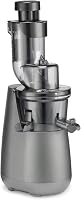
A cold press juicer machine slowly crushes and presses produce through an auger and filter. It can suit regular juice makers who are willing to prep ingredients and clean removable parts in exchange for a slow pressing process and features such as pulp control or hands-free feeding.
The phrase covers several designs. Some machines feed ingredients one piece at a time, while others have a large hopper; filters, screens, controls, and care instructions vary by model.
Start by listing the ingredients you make most often, the amount you usually prepare, and where the machine will sit. Our guide to what cold press means on a juicer explains the term before you compare specific models.
What does a cold press juicer machine do?
A cold press juicer machine uses an auger to crush and press produce against a screen, separating juice from pulp. This slow juicing style can handle a range of fruits and vegetables, though the feed method and included controls differ.
The term “cold press” doesn't mean the juice stays cold or that every machine works the same way. Treat it as a broad description and check the particular design, ingredients it supports, and its cleanup routine.
If quick processing matters more than a slow auger, compare this style with a centrifugal juicer. The right choice depends on your routine, not the name printed on the machine.
Is a masticating juicer a cold press juicer?
A masticating juicer is often called a cold press juicer because both terms commonly describe slow auger machines. Brand naming varies, so look at how produce enters, gets pressed, and leaves as pulp.
Our guide to what a masticating juicer does explains the auger process. A twin-gear, or triturating, juicer uses a more specific two-gear design; see what a triturating juicer is if you're considering that type.
Which cold press juicer design fits your routine?
The right design is the one that fits your counter and the way you prepare juice. Hand-fed models keep loading direct, while a hands-free hopper can reduce repeated feeding.
| Design | Good fit when | Check before choosing |
|---|---|---|
| Vertical auger | You want a compact counter footprint | Height under cabinets and the parts you must wash |
| Horizontal auger | You have room for a longer, lower layout | Counter depth and how ingredients enter |
| Hands-free hopper | You prepare larger batches and want fewer loading steps | Hopper size, height, and cleaning time |
| Twin gear | You specifically want a two-gear pressing design | Assembly and cleaning steps |
These categories are a starting point, not a guarantee of exact juice yield or easy cleanup. Check each model's dimensions, parts, included filters or screens, and care instructions.
A vertical body may use less counter depth but still be too tall beneath upper cabinets. A hopper can reduce repeated loading while taking more room than a hand-fed juicer.
What should you check before buying a cold press juicer?
Check produce fit, prep, counter space, cleanup, and useful controls before comparing small extras. Those practical details decide whether a machine suits your kitchen after the first few uses.
Will it handle the produce you use?
Write down the ingredients you juice most, such as celery, apples, carrots, leafy greens, or ginger. Look for those uses in the machine's stated features and find out whether the feed opening means you need to cut produce into smaller pieces.
A wide chute can reduce some prep, but it doesn't mean every ingredient can go in whole. Our feed chute width guide explains how opening size affects prep.
For greens, consider whether the machine offers a pulp filter or screen that suits your preferred texture. Compare options in our leafy greens juicer guide, then check each model's feeding instructions.
How much counter and cabinet space do you have?
Measure the counter area, cabinet clearance, and space needed to open a lid or remove parts. A machine may fit its footprint but still be awkward to use if you can't reach the hopper or lift out a container.
Think about storage between uses, too. A compact body is easier to leave out in a small kitchen, while a larger hopper can make batch prep simpler if you have room for it.
How much cleanup are you willing to do?
Check which parts touch juice and pulp, whether they're dishwasher safe, and whether any require hand washing. Removable parts still need attention around screens, spouts, and pulp outlets.
A mesh-free filter changes the cleanup design, but the rest of the machine still needs care. Compare mesh-free juicer cleaning and dishwasher-safe juicer parts before deciding which routine you'll keep up with.
Do you need pulp control or extra screens?
Pulp filters matter if you want to switch between a smoother drink and one with more pulp. Separate screens for smoothies or sorbet can add useful options if you expect to make those foods.
Extra parts take storage space and add pieces to rinse or wash. Choose them because you'll use the function, not just because it's included.
Does a slow juicer suit your pace?
A cold press juicer is a poor match if your main goal is the fastest possible glass with minimal prep. Slow auger machines still need ingredients loaded, pulp emptied, and parts cleaned; some designs reduce those steps, but none remove the routine.
If speed is your main concern, compare the trade-offs in cold press vs. centrifugal juicers. If your priority is the pressing style, focus on the model's feed method and care requirements.
Which cold press juicer machines fit different buyers?
These four machines illustrate distinct choices: compact controls, hands-free batch feeding, a low-profile vertical layout, and a mesh-free filter. Match the model to the step you most want to simplify, then check its measurements against your kitchen.
Ninja NeverClog JC151: pulp choices in a compact design
The Ninja NeverClog JC151 includes two pulp filters, letting you choose Less Pulp or Lots of Pulp. Start/Stop and Reverse are its two one-touch programs, and an anti-drip lever helps contain spills when you pause to pour.
The juice-contact parts are dishwasher safe, and the machine measures 12.11 in deep, 7.15 in wide, and 15.93 in high. Measure cabinet clearance as well as counter depth before choosing a spot.
Choose it if you want pulp options and straightforward controls in a compact machine. Skip it if your main goal is to load a full recipe at once; a hands-free hopper is a better fit for that routine.
Kuvings AUTO10: hands-free feeding for batch prep
The Kuvings AUTO10 uses a 3-liter hopper designed for hands-free juicing. Its included juice, smoothie, and sorbet screens give it more than one preparation role.
The AUTO10 measures 10 in deep, 8 in wide, and 19 in high. Its removable parts still need cleaning, so consider both the loading convenience and the work after juicing.
Choose it if reducing repeated feeding matters and you have space for its height and hopper. Skip it if you mostly make one small glass and prefer a compact machine that takes less counter room.
Omega 43 RPM Compact Vertical Juicer: a low-profile body
The Omega vertical juicer runs at 43 RPM and has a no-drip tap at the juice spout. Closing the tap while juicing lets juice or nut milk mix in the chamber; the interlock must be engaged for the machine to operate.
It measures 9.14 in deep, 15.67 in wide, and 9.49 in high. Its body is much wider than it is tall, so measure the full footprint rather than assuming “vertical” means narrow.
Choose it if you want a low-profile body and a closed spout for mixing. Skip it if your counter is narrow from side to side or you want a more direct setup without an interlock.
Cuisinart CSJ-300: a mesh-free filter design
The Cuisinart CSJ-300 is a masticating slow juicer with a mesh-free filter. Its removable parts are top-rack dishwasher safe, while its care instructions specify hand washing.
The CSJ-300 measures 6.97 in deep, 10.24 in wide, and 18.27 in high. Check the height under your cabinets and decide whether the hand-wash care routine fits your kitchen.
Choose it if the mesh-free filter addresses a cleanup concern and you can hand wash as directed. Skip it if you want every removable part to go in the dishwasher.
How do you compare cold press juicer features?
Compare each feature by the task it saves you. A useful feature reduces a step you repeat, while an unused accessory takes up storage and may add cleanup.
| Feature | Helps with | Trade-off to consider |
|---|---|---|
| Reverse control | Can help reduce jams on models with this function | You'll still need to feed ingredients as directed |
| Pulp filters | Lets you choose a different juice texture | Filters need rinsing and storage |
| Large hopper | Reduces repeated loading for a batch | Takes more counter and cabinet space |
| No-drip tap | Helps contain drips while pouring or mixing | Adds a part to clean |
| Multiple screens | Supports more than one kind of preparation | More parts to organize and clean |
| Dishwasher-safe parts | Can simplify some cleanup | Check which parts are safe and how to load them |
Don't use wattage or RPM alone to predict juice quality. Those figures describe parts of a machine, but they don't show how much juice your ingredients will yield or how the cleaning routine will feel in your kitchen.
How do you set up and care for a cold press juicer?
A good setup starts with reading the machine's instructions and giving it a stable spot near an outlet. Assemble the parts in the stated order and confirm that lids, filters, and interlocks are engaged before switching it on.
Make room for the juice jug and pulp container before you start. If the model has a no-drip tap or anti-drip lever, learn how it moves before there is juice in the spout.
Prepare produce according to the machine's instructions. Remove hard pits and inedible parts, cut ingredients to fit the opening, and avoid forcing pieces into the feed.
When you're done, empty the pulp container and rinse juice-contact parts promptly. Follow the care instructions for each part, especially where they distinguish dishwasher-safe parts from hand-wash parts.
For a step-by-step first use, follow our cold press juicer setup guide. If pulp keeps backing up, our guide to why juicers clog covers common causes and ways to adjust your routine.
What common cold press juicer mistakes should you avoid?
The most common mistakes are choosing by one specification, skipping measurements, and delaying cleanup. A few checks before and after juicing prevent mismatches between the machine and your routine.
- Buying by wattage or RPM alone: Motor power and speed don't describe the whole juicing or cleanup experience. Check the feed method, pulp controls, included screens, and care instructions.
- Ignoring vertical clearance: Measure the full height and leave room to open the lid or lift out parts. A machine that fits under a cabinet when closed may still be awkward to load.
- Assuming a wide chute means no prep: Follow the size limits and produce preparation instructions for the machine. Some ingredients still need trimming or cutting.
- Forcing produce into the opening: Feed ingredients at a steady pace and use the controls as instructed. Pushing too hard can contribute to jams.
- Leaving pulp to dry: Empty the container and rinse parts soon after use. Dried pulp is harder to remove from narrow outlets and screens.
- Buying features you won't use: Extra screens and filters need storage and care. Choose them when they match a regular recipe or a texture you want.
Which cold press juicer machine should you choose?
Choose the Ninja JC151 if pulp control and a compact layout matter most; choose the Kuvings AUTO10 if you prepare batches and want hands-free feeding. The Omega suits a low-profile vertical setup with a no-drip mix-in tap, while the Cuisinart fits buyers who prefer a mesh-free filter and accept hand washing.
Before buying, measure the space, check the care routine, and decide which feature will save you a step each week. For more options, browse our best cold press juicer machines or compare cold press juicers for home use.
Frequently asked questions
What is a cold press juicer machine?
A cold press juicer machine usually uses a slow turning auger to crush and press produce through a filter. The name describes a style of juicing, not one exact design, so compare how ingredients enter, how pulp is managed, and what cleaning requires before you buy.
Is a masticating juicer the same as a cold press juicer?
The terms often refer to similar slow juicers that use an auger to crush and press produce. Naming varies by brand, so check how the machine feeds ingredients and separates juice from pulp instead of relying on its label alone.
Are cold press juicers good for leafy greens?
Many slow auger juicers are designed for leafy greens, but results depend on the machine and how you feed the leaves. Follow the instructions, and alternate greens with firmer produce if recommended.
Cut or roll long leaves to help them enter the feed opening.
Should I choose a hands-free cold press juicer?
Choose a hands-free model if reducing repeated feeding matters more than a smaller footprint or simpler setup. A large hopper can take a full recipe, but the machine occupies counter space and its removable parts still need cleaning.
How do I choose between vertical and horizontal juicers?
Compare the actual footprint, feed opening, pulp handling, and cleaning routine because vertical and horizontal labels don't tell you how a model fits your kitchen. Measure counter and cabinet clearance, then match the juicer to the produce you use most.