What Is a Triturating (Twin Gear) Juicer?
A triturating juicer uses 2 interlocking gears to crush and press produce. It’s a type of slow juicer, also called a twin gear juicer, for people who want that mechanism and can manage its setup and cleanup.
On this page (8 sections)
- What is a triturating juicer, and what does it do?
- How does a twin gear juicer work?
- What produce can a twin gear juicer handle?
- What are the benefits and tradeoffs of twin gears?
- How does a twin gear juicer compare with a single-auger model?
- Which features matter when choosing a triturating juicer?
- What common mistakes should you avoid?
- Is a triturating juicer right for your kitchen?
A triturating juicer is a slow juicer with 2 interlocking gears that crush and press produce to extract juice. It’s also called a twin gear juicer, and it suits people who want this mechanism and are comfortable with assembly and cleanup.
The gears pull food into the chamber, break it down, and press it against a screen. Juice passes through the screen while pulp exits separately.
A single-auger juicer uses one spiral-shaped part to move and press produce. Both designs are slow juicers, but the mechanism, parts, and routine differ.
What is a triturating juicer, and what does it do?
A triturating juicer uses two turning gears to crush produce before pressing out its juice. “Triturate” means to grind or crush into smaller pieces, which describes the action inside the juicer.
The gears mesh closely to draw produce through the juicing chamber. Pressure separates liquid from pulp, and a screen lets the juice pass while retaining most of the solid material.
“Twin gear” describes the same basic design by naming its two gears. The terms “triturating” and “twin gear” are often used for the same type of juicer.
How does a twin gear juicer work?
A twin gear juicer draws produce between two gears, then presses the crushed material through a screen. You feed the food into the chamber, where the gears break it down and move it toward the juice and pulp outlets.
Depending on the model, you may need to cut produce to fit the feed opening and use a pusher. Follow the manual for assembly, feeding, and cleaning so the gears and screen are fitted correctly.
Before the first use, place the juicer on a stable counter and identify each removable part and outlet. Assemble it in the order shown in its manual, then make sure the juice container and pulp container are positioned under their outlets.
Is a triturating juicer the same as a cold press juicer?
A triturating juicer is one kind of slow juicer commonly grouped under the cold press label. “Cold press” is a broad term for juicers that press produce instead of extracting juice with a fast-spinning blade.
Some cold press juicers use one auger, while twin gear models use two gears. Our guide to what cold press means on a juicer explains how the term is used.
What produce can a twin gear juicer handle?
A twin gear juicer can process many fruits, vegetables, herbs, and leafy greens, depending on its design and the preparation it requires. Its crushing action can suit people who regularly juice greens and fibrous ingredients.
Cut firm produce into pieces that fit the feed opening. Feed leafy greens in manageable portions, and alternate them with firmer produce if the manual recommends it.
For ingredient-specific guidance, see our guides to juicers for leafy greens and juicers for ginger and hard roots. The right choice also depends on how much preparation and cleanup you want to take on.
What are the benefits and tradeoffs of twin gears?
The main benefit is a two-gear crushing and pressing mechanism, which suits buyers who specifically want a twin gear juicer for their produce routine. The tradeoff is a machine with parts that need correct assembly and careful cleaning.
Before buying, consider how often you’ll juice, what you plan to feed it, and whether you’ll clean the parts soon after use. If you want a simpler setup or hands-free feeding, compare single-auger designs and their specific features.
The Tribest Greenstar GS-2000 is a direct example of a twin gear model. It has stainless-steel gears, automatic pulp ejection, and included cleaning brushes.
How does a twin gear juicer compare with a single-auger model?
A twin gear juicer uses 2 gears, while a single-auger juicer uses 1 rotating auger. Both press produce at a slow speed, but the chamber layouts and parts differ.
Choose twin gears if you want that mechanism and are prepared for its setup and care routine. Choose a single-auger model if you want a different pressing design or a feature such as hands-free loading.
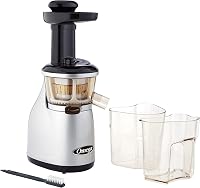
The Omega NC1000HDS is a single-auger juicer described for leafy vegetables and wheatgrass. Removable parts are top-rack dishwasher safe on a cold cycle, which may suit buyers who want that cleaning option.
See our comparison of twin gear and masticating juicers for a closer look at how the mechanisms differ. For a wider overview of slow juicer designs, read what a masticating juicer is.
Which features matter when choosing a triturating juicer?
When choosing a triturating juicer, start with the gear design, then check feed steps, cleaning, size, and included uses. The right fit depends on your kitchen routine as much as on the juicing mechanism.
Do you need two gears?
Choose a twin gear model if you specifically want its mechanism and are willing to assemble and clean the parts. If you mainly want a slow juicer, a single-auger model gives you a different pressing design to consider.
The Tribest Greenstar GS-2000 includes cleaning brushes and automatic pulp ejection. Its maker also offers optional pasta and breadstick accessories.
Would hands-free feeding suit you better?
A hands-free juicer suits you if you want to load more produce at once and let the machine feed it. This convenience feature is separate from the twin gear mechanism.
The Kuvings AUTO10 is a single-auger model with a 3-liter hopper, an auto-cutting blade, and juice, smoothie, and sorbet screens. It fits buyers who value hands-free loading and the included screens over a twin gear design.
The AUTO10 measures 10 in deep, 8 in wide, and 19 in high, so check your counter and storage space before choosing it. For other ways to reduce prep, see our guide to juicer feed chute width.
Is easier cleanup a priority?
If you juice often, cleaning time should be part of your choice. Removable parts, an included brush, and a filter you can reach easily may make the routine more manageable.
The Cuisinart CSJ-300 has a mesh-free filter and removable parts, but its care instructions call for hand washing. Choose it if that style of filter appeals to you and hand washing fits your routine.
Check every model’s care instructions before buying. For practical cleanup steps, read how to clean a masticating juicer.
What common mistakes should you avoid?
The most common mistakes are choosing by the “cold press” label alone, feeding produce too quickly, and putting off cleanup. The mechanism and the manual’s instructions matter more than a broad product label.
Don’t assume every cold press juicer has twin gears. Confirm that the machine uses two gears if that feature is the reason you want a triturating juicer.
Don’t force large or tough pieces through a feed opening. Cut produce to fit, use the included pusher as directed, and slow down if the chamber stops moving food through.
Rinse removable parts soon after juicing so pulp has less time to dry. Check the manual before putting any parts in a dishwasher, since care rules vary by model.
Is a triturating juicer right for your kitchen?
A triturating juicer is right for you if you want a two-gear machine and accept its assembly and cleaning routine. Skip it if you want hands-free loading, fewer setup steps, or a simpler appliance for occasional juice.
Choose the Tribest Greenstar GS-2000 if twin gears, automatic pulp ejection, and included cleaning brushes match your priorities. Choose the Kuvings AUTO10 if you prefer a hands-free single-auger juicer with a large hopper and multiple screens.
For a different single-auger option, the Omega NC1000HDS suits buyers who value its listed top-rack, cold-cycle dishwasher care. The Cuisinart CSJ-300 is a fit if you want a mesh-free filter and are comfortable hand washing its removable parts.
For a broad comparison of juicer types, read cold press vs centrifugal juicers. If you’ve decided you want a twin gear design, our twin gear vs masticating juicer comparison can help you make the final choice.
Frequently asked questions
What does triturating mean in a juicer?
Triturating means crushing or grinding. In a triturating juicer, 2 gears turn together to break down produce and press it through a screen.
The term usually refers to a twin gear juicer, a type of slow juicer designed to process fruits, vegetables, and leafy greens.
Is a triturating juicer the same as a masticating juicer?
A triturating juicer is a type of masticating juicer, but the terms often describe different designs. Triturating models use 2 gears, while many juicers called masticating use a single auger.
Check the juicer’s mechanism, since names can vary between brands.
Is a twin gear juicer good for leafy greens?
A twin gear juicer can suit leafy greens because its gears crush and press the leaves rather than relying on a fast spinning blade. Feed greens in a steady mix with other produce as your manual directs, and expect more assembly and cleanup than with a simple centrifugal machine.
Are twin gear juicers hard to clean?
They can take more time to clean because the gears and screen have surfaces where pulp can collect. Look for removable parts, an included brush, and clear cleaning steps.
Rinse parts soon after juicing so pulp has less time to dry.