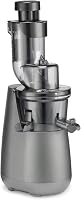
Is the Nama J2 a Masticating Juicer?
Yes, the Nama J2 is a masticating juicer. It uses a single auger that turns slowly at 50 RPM to crush and press produce rather than spin a blade at high speed, so it makes cold-pressed juice.
On this page (8 sections)
- What makes a juicer a masticating juicer?
- How does the Nama J2's single auger work?
- Is the Nama J2 a centrifugal juicer or a masticating juicer?
- What does the Nama J2's slow speed do for juice quality?
- How does the hands-free hopper fit with a masticating design?
- Who should pick a masticating juicer like the J2?
- How do you care for a masticating juicer like the J2?
- The short answer on the Nama J2's design
Yes, the Nama J2 is a masticating juicer. It uses a single auger turning at 50 RPM to crush and press produce instead of a fast spinning blade.
Nama's specs list it as a single auger masticating juicer, and the hands-free hopper sits on top of that slow-press design. That combination of slow speed and a wide feed opening is what makes the "is the Nama J2 a masticating juicer" question worth answering plainly.
What makes a juicer a masticating juicer?
A masticating juicer uses one slow-turning auger to crush and squeeze produce, while a centrifugal juicer spins a flat blade or disc at high speed and throws juice through a strainer. The word masticating means chewing or grinding, which describes the auger's action as it moves fruit and vegetables through a chamber.
Nama lists the J2's motor as 200 W and its auger speed as 50 RPM. A typical centrifugal machine runs its blade at thousands of revolutions per minute.
That difference in speed is the core reason masticating juicers press slowly and quietly instead of whipping air into the juice.
Nama lists the J2 as a single auger masticating juicer in its own category. So the answer to whether the Nama J2 is a masticating juicer comes straight from how the machine is built, not from a marketing claim.
If you want the full definition and how the process works, read what a masticating juicer is and how it works.
How does the Nama J2's single auger work?
The J2's auger grinds produce against a strainer, then pushes the juice out while pulp exits separately. Produce drops from the wide hopper into the chamber, the auger chews it slowly, and the juice container collects the pressed liquid.
Nama says the design extracts more juice from leafy greens and other produce, with less waste than traditional juicer machines. The 50 RPM auger does the chewing, so you're not feeding stems and leaves one at a time.
Because the auger turns slowly, it doesn't generate the friction heat a fast blade creates. That's the cold-press part of the name, and it's the same principle behind every slow juicer in our roundup of the best slow masticating juicers.
The hands-free hopper adds convenience, but the masticating action is the auger underneath it.
The J2 also ships as a complete kit, which matters if you're setting it up for the first time. Nama lists a detachable power cord, chamber, hopper and hopper lid, spinning brush, auger, juice container and juice container lid, pulp container, juice strainer, coarse strainer and pusher.
Two strainers means you can choose a finer or coarser screen depending on whether you want clearer juice or more body.
Nama lists recommended uses beyond juice, including sauce, smoothies and sorbet. Those tasks rely on the same slow auger pressing action rather than a spinning blade, which is why the masticating design carries over to thicker recipes.
Is the Nama J2 a centrifugal juicer or a masticating juicer?
It's a masticating juicer, not a centrifugal one. Nama's category listing and its 50 RPM auger both place it in the slow, chewing family.
A centrifugal juicer would need a spinning blade and a much higher speed to work at all.
This matters when you compare the two styles. Masticating juicers run slowly and handle leafy greens well.
Centrifugal juicers are usually faster and simpler to feed, which is why they're often cheaper. The J2's hands-free feed opening is a convenience feature on top of a masticating base, so the machine's style stays slow-press.
If speed is your main concern, a centrifugal model may suit you better. If juice quality and quiet operation matter more, the J2's masticating design is the right fit.
What does the Nama J2's slow speed do for juice quality?
The J2's 50 RPM speed presses produce gently and quietly, which Nama says helps maximize juice output. Slow pressing means the auger chews rather than slices, so the juice comes out cold-pressed.
Nama also says the design extracts more juice from leafy greens and other produce than traditional juicer machines. That's the typical benefit buyers look for in a masticating juicer, since slow squeezing wrings more liquid out of fibrous plants.
The 200 W motor and single-speed design keep the machine simple. There's no speed dial to manage, just a hopper you load and an auger that runs at its set pace.
One speed also means fewer settings to remember, and the 50 RPM rate is fixed for every recipe, whether you're pressing greens or fruit.
How does the hands-free hopper fit with a masticating design?
The J2's wide hopper lets you load a whole recipe at once and walk away, and Nama says the self-feeding hopper frees you to multitask. The slow auger keeps turning underneath while you do other things.
That pairing sets the J2 apart from many slow juicers that ask you to push produce down a narrow chute a piece at a time. Nama's design turns the slow press into a batch job: fill the hopper, let the auger chew through it, and come back to a full juice container.
Nama says the machine's parts are quick to release for cleanup. Hand wash only, per the care instructions.
Slow juicers with a lot of parts take longer to clean, so that quick-release design matters for daily use. Our walkthrough of how to clean a masticating juicer covers the part-by-part routine for this style of machine.
The J2 weighs 12.1 pounds and measures 9 by 9.8 by 17.7 inches. That footprint is tall rather than wide, so it needs vertical clearance under a cabinet more than a broad stretch of counter.
Nama lists the capacity as 1.9 pounds and the finish as painted, in black.
Who should pick a masticating juicer like the J2?
Pick a masticating juicer if quiet operation and good leafy-green yield matter more than speed. The J2's 50 RPM auger and wide hopper suit people who want to load a batch and leave it running.
Skip it if you want the fastest possible glass of juice. A centrifugal machine will get you there quicker, though with more noise and less juice from soft greens.
The J2 also asks for hand washing, so anyone who wants to load the dishwasher should look elsewhere.
Where the Nama J3 fits
The J3 is the smaller hands-free Nama for tighter kitchens. It runs the same 50 RPM slow auger at 130 W, so it's a masticating juicer too.
Nama says its compact frame suits smaller kitchens and travel.
Its hopper and quick-release parts follow the J2's batch approach in a smaller body. The J3 weighs 9.7 pounds and measures 6.5 by 8.9 by 15.4 inches, so it's lighter and shorter than the J2.
It also lists a 15 fluid ounce capacity and a stainless steel and Tritan build. Pick the J3 over the J2 when counter space is tight, and the J2 when you want the bigger machine.
Where the Omega vertical juicer fits
The Omega 43 RPM is a vertical masticating juicer with a no-drip tap. It runs even slower than the J2, at 43 RPM with a 150 W motor.
Omega says its dual-edge auger squeezes more juice and its auto cleaning system keeps the screen clear.
The tap lets you close the spout to mix juice or make nut milks. Omega also lists it as dishwasher safe, unlike the hand-wash-only Nama machines.
That's the pick for someone who wants slow pressing with easier cleanup. For a direct side-by-side, see Nama J2 vs Kuvings AUTO10 to weigh hands-free feeding against other slow-juicer designs.
How do you care for a masticating juicer like the J2?
Clean the auger and strainer after every use, because pulp dries onto the screen and clogs the juice path. Nama includes a cleaning brush and a spinning brush with the J2, and the care instructions call for hand washing.
Rinse the chamber, auger, and strainers as soon as you finish juicing, before pulp hardens. The quick-release parts come apart without tools.
Let everything air-dry fully before reassembling so moisture doesn't sit in the chamber.
Keep the motor base dry and unplugged during cleaning. Nama lists the power cord as detachable, so you can separate it from the base before you start.
For the full routine, our masticating juicer cleaning guide walks through each part. If you're still deciding between styles before you buy, the slow masticating juicer roundup compares the options.
The short answer on the Nama J2's design
Is the Nama J2 a masticating juicer? Yes.
A single 50 RPM auger chews and presses produce slowly, which is the definition of a masticating juicer. The hands-free hopper is a convenience layer on top of that slow design, not a different juicing method.
Pick the J2 if you want quiet, hands-free cold pressing with strong leafy-green yield. Pick the J3 for the same masticating action in a smaller footprint.
Pick the Omega 43 RPM if you want a slower vertical juicer with a no-drip tap and dishwasher-safe parts. For a closer look at hands-free models from other brands, our Nama J2 vs Kuvings AUTO10 comparison covers the differences.
Frequently asked questions
Is the Nama J2 the same as a cold press juicer?
Yes. Masticating and cold press juicer describe the same slow, auger-based design.
The Nama J2's 50 RPM single auger crushes produce and presses the juice out without the heat a fast spinning blade creates.
Does the Nama J2 use a centrifugal blade?
No. It has a single auger in a chamber that squeezes produce slowly, not a spinning shredding disc.
That places it in the masticating family rather than the centrifugal family.
What does the 50 RPM speed mean on the Nama J2?
RPM is revolutions per minute. The Nama J2's auger makes 50 slow turns each minute, which is the hallmark of a masticating juicer.
A centrifugal juicer's blade spins thousands of times per minute.
Is a masticating juicer worth it over a centrifugal one?
It depends on your priorities. A masticating juicer like the Nama J2 runs quietly and handles leafy greens well, while centrifugal models are usually faster and cheaper.
Pick slow if juice quality matters more than speed.
Can the Nama J2 juice leafy greens and wheatgrass?
Nama says the J2 is designed to process leafy greens efficiently. Its slow auger pressing action is the typical masticating method for getting juice out of soft, fibrous plants.