8 Best Juicers for Celery (October 2026)
The best juicers for celery include the TUUMIIST Smart Touch 3-in-1 Juicer for mixed-produce routines, the Godspeeds Smoothpress 6-Inch Juicer for narrow counters, and the Omega Celery Juicer for daily celery juice.
On this page (6 sections)
The best juicer for celery for most people is the Omega Celery Juicer, which has a dedicated end cap for celery and a separate cap for other produce. Choose a self-feeding machine for larger batches, or a wide-chute model if you want less prep for several kinds of produce.
A celery juicer should fit your daily routine. Decide whether you want a machine focused on celery, one that feeds itself, or one that also makes other recipes.
For a broader look at slow-press options, see our cold press juicer machine guide. If you also juice greens, compare our juicers for leafy greens and use the feed chute width guide to decide how much prep matters to you.
Our picks at a glance
-
1
 Best for mixed-produce routines
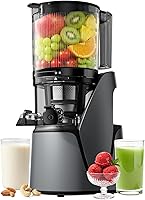
TUUMIIST Smart Touch 3-in-1 Juicer
7.8/10 our score
See it on Amazon -
2

-
3
- 4
 Check it
Hurom H330 Self-Feeding Juicer
Best for family batches - 5
 Best for mesh-free careCheck it
- 6
 Check it
YPONE 2-in-1 Cold Press Juicer
Best for smaller servings - 7
 Check it
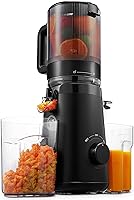
AMZCHEF 6.5-Inch 2-in-1 Juicer
Best for hands-free loading - 8
 Check it
VMIXBLE 5.8-Inch Cold Press Juicer
Best for large juice batches
Which juicer is best for celery by routine?
The Omega is the only pick here with a celery-specific end cap. The other models suit mixed produce, larger loads, different cleanup preferences or smaller counters.
| Product | Best for | Feed chute | Functions | Capacity | Our score |
|---|---|---|---|---|---|
| TUUMIIST Smart Touch 3-in-1 Juicer | mixed-produce routines | 6.5 in | Juice, nut milk and sorbet | 100 oz pitcher | 7.8 |
| Godspeeds Smoothpress 6-Inch Juicer | narrow counters | 6 in | 7.7 | ||
| Omega Celery Juicer | daily celery juice | 7.6 | |||
| Hurom H330 Self-Feeding Juicer | family batches | 7.6 | |||
| Aeitto 3-in-1 6-Inch Juicer | mesh-free care | 6 in | Juice, nut milk and sorbet | 7.5 | |
| YPONE 2-in-1 Cold Press Juicer | smaller servings | 5.8 in | Juice and nut milk | 7.4 | |
| AMZCHEF 6.5-Inch 2-in-1 Juicer | hands-free loading | 6.5 in | Juice and nut milk | 7.2 | |
| VMIXBLE 5.8-Inch Cold Press Juicer | large juice batches | 5.8 in | 100 fl oz | 6.7 |
TUUMIIST Smart Touch 3-in-1 Juicer: Best for mixed-produce routines
- 6.5 in self-feeding chute
- Juice, nut milk and sorbet functions
- 100 oz pitcher
The wide self-feeding chute takes whole celery and other produce, while the controls offer juice, nut milk and sorbet functions.
Pros
- Wide self-feeding chute
- Three functions
- Auto-reverse
Cons
- Large footprint at 16.92 x 7.59 x 13.58 in
- Hand-washing guidance is not specified
The TUUMIIST suits a household that juices celery alongside whole fruit and wants one machine for several recipes. Its 6.5 in self-feeding chute is designed for whole celery and apples, and its controls offer juice, nut milk and sorbet functions.
The 100 oz pitcher fits larger batches, while the three-part assembly and auto-reverse are useful features to consider if you plan to juice often. The maker describes the reverse function as a way to clear potential jams.
Its footprint is 16.92 x 7.59 x 13.58 in, so measure the counter space where you plan to keep it. Choose it if broad use matters more than having a machine built specifically around celery.
Godspeeds Smoothpress 6-Inch Juicer: Best for narrow counters
- 6 in chute
- 58 RPM slow press
- 10-year warranty
Its wide opening accepts whole produce, and the 6 x 6 in base takes less counter width than many larger machines.
Pros
- Whole-produce chute
- Narrow 6 x 6 in base
- Godspeeds provides a 10-year warranty
Cons
- Juice cup capacity is 473 ml
- Plastic construction
The Godspeeds Smoothpress suits celery drinkers with a narrow counter and a mixed-produce routine. The 6 in chute accepts whole apples, oranges and cucumbers, and Godspeeds includes celery among its recommended produce.
It operates at 58 RPM, and Godspeeds says its motor stays below 58 dB. A 10-year warranty, juice cup, pulp cup, pusher and cleaning brush are included.
The juice cup holds 473 ml, so a larger batch may mean stopping to empty it. Choose this model for its 6 x 6 in base and whole-produce opening; skip it if you need a large juice container for uninterrupted batch work.
Omega Celery Juicer: Best for daily celery juice
- Celery-specific end cap
- 80 RPM
- 15-year limited warranty
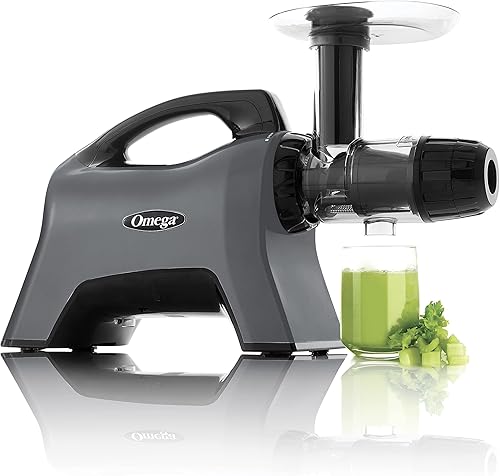
The included celery end cap is made specifically for celery, with a separate standard end cap for other produce.
Pros
- Dedicated celery end cap
- Separate end cap for other produce
- Omega provides a 15-year limited warranty
Cons
- Celery end cap is not meant for other produce
- 18.9 in wide
The Omega is the most celery-focused pick in this roundup. Its dedicated celery end cap is designed for celery, while the included standard cap is for other fruits and vegetables.
Omega says the juicer operates at 80 RPM and presses celery longer to extract juice. Its instructions recommend feeding fresh, cold, whole stalks rather than cutting them into small pieces.
At 18.9 in wide, it needs a generous counter spot. Choose it if celery is your main use and you value a dedicated setup; skip it if you want one general-purpose cap or have limited counter width.
Hurom H330 Self-Feeding Juicer: Best for family batches
- 2-liter self-feeding hopper
- 50 RPM
- 15-year warranty
The 2-liter hopper accepts whole celery and other produce for hands-free batch juicing. Hurom offers a 15-year warranty.
Pros
- Self-feeding hopper
- Accepts whole celery
- Quiet motor
Cons
- 14.8 lb weight
- Hand wash only
The Hurom H330 suits batch juicing when you want to load produce and step away. Its 2-liter self-feeding hopper accepts whole celery, carrots and apples, and Hurom describes the motor as quiet.
The 50 RPM pressing system comes with fine and coarse strainers, so you can choose between smoother and fuller-textured juice. Hurom says juice can stay fresh for up to 72 hours in the fridge.
This machine weighs 14.8 lb, and its parts are hand-wash only. Choose it if hands-free loading and family-size batches matter more than dishwasher cleanup.
Aeitto 3-in-1 6-Inch Juicer: Best for mesh-free care
- 6 in feed chute
- Mesh-free system
- Juice, nut milk and sorbet functions
The mesh-free design avoids a separate mesh screen, and the wide chute accepts celery and other whole produce.
Pros
- Mesh-free design
- Three functions
- Self-feeding operation
Cons
- Dimensions and capacity are not specified
- Cleaning still involves rinsing the chamber
The Aeitto suits buyers who want to avoid cleaning a separate mesh screen. Its mesh-free system is designed for juice, nut milk and sorbet, and the 6 in chute fits celery, apples and other produce.
The chamber rinses under running water, and a brush is included for areas that need more attention. Mesh-free design still involves rinsing the chamber and its parts after use.
Choose it if easier screen care and multiple functions are priorities. Dimensions and capacity aren't specified, so skip it if you need to confirm a particular counter fit or batch size before buying.
YPONE 2-in-1 Cold Press Juicer: Best for smaller servings
- 5.8 in feed chute
- 55 RPM
- Juice and nut milk functions
The wide chute takes whole celery stalks, and the machine also supports nut milk and soy milk.
Pros
- Wide feed chute
- Two functions
- Includes cleaning brush
Cons
- 500 ml and 700 ml capacities
- Care instructions mention both dishwasher and hand washing
The YPONE offers a 5.8 in feed chute for whole celery and other produce. It runs at 55 RPM and includes dual strainers, a cleaning brush, and functions for juice and nut milk.
Its stated capacities are 500 ml and 700 ml, which may suit smaller servings better than a family batch. Care instructions mention both dishwasher-safe and hand-wash care, so check the manual for each removable part.
Choose it if you want a wide chute and smaller containers. Skip it if you want one clear cleaning method without checking which parts can go in the dishwasher.
AMZCHEF 6.5-Inch 2-in-1 Juicer: Best for hands-free loading
- 6.5 in chute
- Self-feeding hopper
- Juice and nut milk functions
The wide chute and self-feeding hopper suit larger loads, with triple filtration for a smoother juice texture.
Pros
- Wide chute and self-feeding hopper
- Triple filtration
- Two functions
Cons
- Detachable components are not dishwasher safe
- Dimensions are 7.9 x 8.2 x 16.3 in
The AMZCHEF pairs a 6.5 in chute with a self-feeding hopper, making it a fit for several servings in one run. Its 7-stage auger and triple filtration are designed to produce a smoother juice texture.
The 60 RPM system is designed for slow pressing, and the machine supports juice and nut milk. Its detachable components need hand washing, so it won't suit someone who wants dishwasher cleanup.
Choose it for hands-free loading and a wide opening. Measure its 7.9 x 8.2 x 16.3 in footprint first, and skip it if hand washing every removable part is a deal-breaker.
VMIXBLE 5.8-Inch Cold Press Juicer: Best for large juice batches
- 5.8 in feed chute
- 100 fl oz capacity
- 57 RPM
Its large stated capacity suits batch juicing, and the chute accepts celery and other produce.
Pros
- Large stated capacity
- Wide feed chute
- Reverse function
Cons
- 3.7 lb weight
- Instructions say to cut high-fiber produce into small pieces
The VMIXBLE suits large batches, with a 100 fl oz capacity and a 5.8 in chute. The brand lists celery among its recommended produce and gives a 57 RPM operating speed.
Its instructions say to cut high-fiber produce into small pieces and mix leafy greens with solid produce. That advice is useful for celery, which has long fibers.
The stated weight is 3.7 lb. Choose it if batch size matters and you're willing to follow the cutting guidance; skip it if you want to feed long celery stalks whole.
How should you choose a juicer for celery?
Start with the task you'll do most: make celery juice, prep mixed ingredients, fill a large batch or minimize cleanup. That choice narrows the field faster than comparing every motor and chute measurement.
Is a celery-specific end cap worth it?
A dedicated celery end cap is useful if celery juice is your main reason for buying. Omega includes one, plus a standard cap for other produce.
Omega says the celery cap isn't meant for other fruits or vegetables. If you make mixed juices more often than pure celery juice, a general-purpose machine may be simpler to use.
How wide should the feed chute be?
A wider chute can cut down chopping, but it doesn't mean every celery stalk should go in whole. These picks have openings from 5.8 to 6.5 in, and their preparation advice differs.
Read our guide to juicer feed chute width before making chute size your deciding factor. Check the manual's directions for fibrous produce, too.
Is self-feeding useful for celery batches?
A self-feeding hopper can reduce the need to add produce stalk by stalk. The Hurom H330 has a 2-liter hopper, while the TUUMIIST and AMZCHEF also describe self-feeding designs.
For one small serving, loading by hand may be easier than storing and cleaning a larger machine. If you want a self-feeding design, compare our hands-free juicer picks.
Should you choose a slow masticating juicer?
Every pick here is described as a slow or cold-press machine, with variations in feed style, cleanup and produce preparation. See our cold press juicer machine guide to compare how these machines fit different kitchens.
The term “cold press” doesn't tell you how much celery needs cutting or how easily parts clean. Give more weight to a stated preparation method and a cleanup routine you'll follow.
How do you set up and use a celery juicer?
A careful setup starts with stable placement, clean removable parts and the right end cap or strainer for your ingredients. Read the manual before the first run so you know how the juicing body locks into place and which parts can be washed.
Keep the juicer near a sink or clear counter space for loading, collecting juice and rinsing parts. For first-use instructions, see our guide on how to set up a cold press juicer.
Prepare celery according to your model's instructions. Omega recommends fresh, cold, whole stalks, while VMIXBLE advises cutting high-fiber produce into small pieces.
If you're making a blend, alternate celery with firmer produce where the machine's instructions allow it. Don't assume every juicer handles long fibers in the same way, and don't force produce into the feed opening.
How can you reduce celery fiber buildup and cleanup?
Follow the juicer's directions for cutting and feeding celery to limit fibers collecting in the juicing path. Turn the machine off before clearing a jam, and use a reverse function only as its manual directs.
Several picks have a reverse function, but the method and timing can differ by model. For more troubleshooting steps, see why a juicer keeps clogging.
Rinse removable parts soon after use, especially around screens, chambers and narrow outlets. A brush helps reach small openings, and parts should be washed according to the care instructions for that model.
Don't assume a juicer's parts are all dishwasher safe. The Hurom H330 is hand-wash only, and AMZCHEF says its detachable components aren't dishwasher safe; our masticating juicer cleaning guide covers a part-by-part routine.
What common celery juicing mistakes should you avoid?
The most common mistake is using one preparation method for every juicer. Omega recommends whole stalks, while VMIXBLE calls for cutting high-fiber produce, so check the directions for the exact machine you own.
Another mistake is choosing a wide chute and assuming it removes all prep. A wide opening can reduce chopping for some produce, but the juicer's guidance still takes priority for celery fibers.
Don't use a celery-specific end cap for other produce. Omega specifies that its celery cap is only for celery, so switch to the standard cap for other fruits and vegetables.
Finally, don't leave pulp to dry on removable parts after juicing. Prompt rinsing makes cleanup easier, especially around narrow outlets and screens.
Which celery juicer should you choose?
Choose the Omega Celery Juicer if celery is your main ingredient and you want a dedicated end cap. Pick the Hurom H330 for self-feeding batches, the TUUMIIST for juice, nut milk and sorbet, or the Godspeeds when counter width is tight.
For broader produce use, compare our best juicers for leafy greens and best juicers for ginger. The best juicer for celery is the one whose feeding, batch size and cleaning steps fit the way you'll use it.
Our top 3 picks at a glance
-
1
Best for mixed-produce routines
TUUMIIST Smart Touch 3-in-1 Juicer
7.8/10 our score
See it on Amazon -
2
-
3
Frequently asked questions
What type of juicer works best for celery?
A slow masticating juicer is a practical choice for celery because it presses produce through an auger. The Omega includes an end cap made specifically for celery, while the other picks suit buyers who value wide feeding, batch size or extra recipes.
Compare feeding and cleanup with how often you'll make celery juice.
Do celery stalks need to be cut before juicing?
It depends on the machine. Omega recommends feeding fresh, cold, whole celery stalks, while VMIXBLE advises cutting high-fiber produce into small pieces.
Follow your model's directions before feeding long stalks, since preparation advice differs.
Is a wide chute useful for celery?
A wide chute can reduce chopping, especially if you also juice apples, carrots or cucumbers. Several picks here have openings from 5.8 to 6.5 in.
A wide opening doesn't override the machine's directions for fibrous celery or safe jam clearing.
Can one juicer handle celery and other produce?
Yes. Most picks here are described for multiple fruits and vegetables.
The Omega has two end caps: one made specifically for celery and another for other produce.
Use the dedicated celery cap only for celery, as Omega specifies.
How should you clean a celery juicer?
Rinse removable parts soon after juicing so celery fibers don't dry in the chamber or strainer. Follow your model's care instructions because some parts need hand washing even if other components are dishwasher safe.
A cleaning brush can help reach narrow openings.