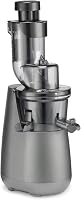
Is a Masticating Juicer Better Than a Centrifugal?
A masticating juicer is better for leafy greens, wheatgrass and nut milks, while a centrifugal juicer is better for fast glasses of apple or carrot juice. Masticating models crush slowly at low RPM for drier pulp and longer juice life; centrifugal models spin a blade fast for speed and a bigger feed chute.
On this page (9 sections)
- How do the two juicer styles actually work?
- Is masticating juicer better than centrifugal for leafy greens?
- Which one gives clearer juice and less foam?
- How fast is each type, and how much prep do they need?
- Is a masticating juicer worth the extra cleaning?
- Which type handles nut milks, sorbets and soft produce?
- Are slow juicers quieter than centrifugal models?
- Which juicer fits your kitchen and your routine?
- So, is masticating juicer better than centrifugal?
A masticating juicer is better than a centrifugal juicer when leafy greens, wheatgrass, ginger or nut milks are on your counter. A centrifugal juicer is better when you want a fast glass of apple or carrot juice and don't want to chop first.
The "is masticating juicer better than centrifugal" question really comes down to what you juice and how much time you'll give it. Neither style wins on every count.
Each one trades speed, prep work, juice quality and cleanup against the others, so the useful comparison is a set of clear use cases rather than one winner.
How do the two juicer styles actually work?
A centrifugal juicer shreds produce against a spinning basket at high speed and flings the juice through a mesh screen, while a masticating juicer crushes and squeezes it slowly with an auger. The mechanics explain almost every difference that follows.
In a centrifugal machine, a flat blade spins inside a basket and the centrifugal force pushes liquid outward through the mesh. The Hamilton Beach Big Mouth uses an 800-watt motor and a 3-inch feed chute, so it can take whole apples and a bunch of celery without pre-cutting.
That speed and wide chute are the style's main draws.
A masticating juicer runs an auger at low RPM. The Omega 43 RPM Compact Vertical Juicer turns its dual-edge auger at 43 RPM with a 150-watt motor and slow squeezing technology.
The Ninja NeverClog JC151 also uses a 150-watt high-torque motor at low speed. Because the auger crushes rather than cuts, it works fibrous leaves and soft fruit more gently.
Is masticating juicer better than centrifugal for leafy greens?
Yes. A masticating juicer is the clear choice for kale, spinach, wheatgrass and other leaves.
A spinning basket tends to fling wet leaf fiber against the mesh, where it clogs and leaves you with soupy pulp.
Slow juicers press leaves between the auger and a screen, so the cell walls break down and more liquid comes out.
The Omega's dual-edge auger has a tighter fit tolerance that Omega says breaks down fiber to a palatable level and leaves less pulp in the glass. That matters when you drink green juice daily and don't want to chew it.
Centrifugal machines can process leaves, and some handle them better than others, but you'll stop more often to scrape the basket and you'll get wetter pulp. If most of your recipes start with greens, skip the spinning style.
Our guide to the best slow masticating juicers covers models built for exactly this.
Which one gives clearer juice and less foam?
Masticating juicers usually pour clearer, with less foam and less browning. The slow crush stirs in less air and generates less heat, so the juice oxidizes more slowly and holds its color longer in the fridge.
The Omega's cold press action works at 43 RPM to reduce heat buildup and delay oxidation, which Omega says extends shelf life.
The Ninja's low-speed auger also aims to reduce foam. Those claims line up with what the design does: a slow squeeze moves liquid without whipping air into it.
Centrifugal juicers push juice through a mesh at speed, so more air and pulp slip into the glass. A fine mesh helps, but you'll often skim foam off the top.
For apple and carrot juice this is a minor annoyance; for delicate greens it changes the drink.
How fast is each type, and how much prep do they need?
A centrifugal juicer is faster and needs less cutting, while a masticating juicer asks for more prep and more minutes. The gap is biggest when your fridge is full of whole apples and carrots.
The Hamilton Beach's 3-inch chute fits a whole apple, a bunch of celery or a handful of carrots, so you can skip the knife. An 800-watt motor and an 80-ounce pulp bin mean fewer stops to empty the waste.
For a family that wants a pitcher of juice before school, this style wins on time.
Masticating machines feed through narrower tubes. Expect to quarter apples, halve carrots and cut beets.
The reward is a slower, quieter session and juice that keeps longer. If you juice in bulk once a week rather than grab-and-go each morning, the prep time is easy to absorb.
Is a masticating juicer worth the extra cleaning?
No, not on cleanup alone. A centrifugal juicer is generally quicker to wash, and a masticating juicer asks for more parts and a fine screen.
Whether the extra minutes are worth it depends on how much you value the juice.
The Ninja's juice-contact parts are dishwasher safe and Ninja says it's designed to be easier to clean than many centrifugal juicers. The Omega has an auto cleaning system that keeps the screen clear during juicing, plus dishwasher-safe care instructions.
Both brands try to shorten the job, but a slow juicer still has an auger, screen and housing to take apart.
Centrifugal cleanup is mostly rinsing the basket and bowl. The mesh needs a brush, but the parts are large and simple.
If you'll skip juicing because you dread the wash-up, pick the faster-clean style. For a step-by-step walkthrough, see how to clean a masticating juicer.
Which type handles nut milks, sorbets and soft produce?
Masticating juicers win for nut milks, sorbets and soft fruit, because a slow auger can press without whipping in air. Centrifugal machines are built for hard produce and struggle with pasty textures.
The Omega's no-drip tap can be closed during juicing so you can mix juice or make nut milks, and closed after juicing so you can remove the cup without a spill. That tap is a practical feature for almond milk and blended drinks.
Its slow squeezing technology also extracts from soybeans.
The Ninja offers two interchangeable pulp filters for less pulp or lots of pulp, which gives you control over texture in fruit and vegetable juice. A centrifugal juicer does best with firm produce like apples and carrots; soft fruit and nuts tend to clog the basket or pass through as pulp.
Are slow juicers quieter than centrifugal models?
Yes. A masticating juicer runs at low RPM and is noticeably quieter than a centrifugal juicer's high-speed whine.
The difference matters if you juice early in the morning.
The Omega's 43 RPM operation and the Ninja's low-speed auger keep the motor working slowly rather than spinning a blade flat out. Centrifugal machines like the Hamilton Beach run at high speed to fling juice through the basket, and that speed is the main source of noise.
For a fuller look at sound levels and what to expect in a kitchen, read are cold press juicers quiet. If noise is your main complaint about juicing, a slow model solves it more than any other single feature.
The trade-off is the prep and cleaning time covered above.
Which juicer fits your kitchen and your routine?
Pick a masticating juicer for greens, nut milks and juice you want to keep; pick a centrifugal juicer for speed and whole-fruit convenience. Here are three models that cover the main buyer types.
Best for green juice and nut milks
The Ninja NeverClog JC151 is the slow juicer to start with if greens and daily wellness shots are your goal. It runs a 150-watt high-torque motor at low speed through fibrous produce like kale, celery, beets and ginger.
Two pulp filters let you choose a smooth or fiber-rich glass, and all juice-contact parts are dishwasher safe. It's compact enough to sit under kitchen cabinets.
Best for compact counters and quiet mornings
The Omega 43 RPM Compact Vertical Juicer suits small kitchens and early risers. Its 43 RPM auger and 150-watt motor crush slowly and quietly, and the no-drip tap lets you close the spout for nut milks or to swap cups without a mess.
The auto cleaning system keeps the screen clear while you juice. It's also a masticating design, which matters if you've wondered is the Nama J2 a masticating juicer and want another slow model to compare against.
Best for speed and whole-fruit juice
The Hamilton Beach Centrifugal Juicer Machine With Big Mouth is the pick when speed and less prep matter more than slow-pressed quality. The 3-inch chute takes whole apples and whole carrots, the 800-watt motor pushes through hard and soft produce, and the 80-ounce pulp bin means fewer stops.
Removable parts are dishwasher safe and a cleaning brush is included. This is the machine for a fast family pitcher, not for wheatgrass.
So, is masticating juicer better than centrifugal?
For most people who juice greens, nuts or soft fruit, yes, a masticating juicer is better, because the slow crush gives clearer juice, drier pulp, quieter mornings and longer fridge life. For anyone who wants a quick glass of apple or carrot juice and hates chopping, a centrifugal juicer is the better buy.
The "is masticating juicer better than centrifugal" answer is really "better for what": choose slow for quality and range, choose fast for speed and convenience. If you're leaning slow, start with the Ninja NeverClog for greens and pulp control, or the Omega for a compact, quiet counter.
If speed wins, the Hamilton Beach Big Mouth is the straightforward choice. Whichever you pick, store the juice cold and drink it soon.
Frequently asked questions
Does a masticating juicer really make healthier juice?
It makes juice with more of the fiber and nutrients left in the glass and less oxygen stirred in, because it crushes slowly instead of spinning a blade at high speed. That can mean less foam and slower browning, though the health difference in the glass is smaller than marketing suggests.
Can a centrifugal juicer handle kale and wheatgrass?
It can, but poorly. Fibrous leaves wrap around the spinning basket and clog the mesh, so you get wet pulp and stop often to scrape.
A masticating juicer's slow auger presses leaves against a screen instead, which is why green juice is its home turf.
How long does masticating juice keep in the fridge?
Longer than centrifugal juice, often a full day or more, because the slow crush stirs in less air and the enzymes oxidize more slowly. Store either type in a sealed jar filled near the top and drink it within a couple of days for the best flavor.
Do I need to cut produce for a masticating juicer?
Usually yes. Most slow juicers have a narrow feed tube, so apples, carrots and beets need to be cut into smaller pieces first.
Centrifugal machines with a wide chute like the Hamilton Beach Big Mouth accept whole apples and whole carrots, which saves prep time.
Which type is easier to clean?
Centrifugal juicers usually win on speed of cleanup, because the basket and bowl rinse quickly even though the mesh needs a brush. Masticating juicers have more parts and a fine screen to scrub, so budget a few extra minutes each time.