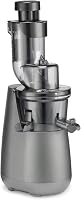
Are Cold Press Juicers Worth It?
Yes, a cold press juicer is worth it if you juice several times a week and want more juice from fewer ingredients. Quiet running, longer shelf life and creamy texture are the payoff, though slower juicing and more parts to wash are the trade.
On this page (10 sections)
- Are cold press juicers worth it compared with centrifugal models?
- How much juice do you actually get from an auger?
- Is the cleanup really worse than a fast juicer?
- How long does cold press juice last in the fridge?
- Is a slow juicer quiet enough for early mornings?
- What does daily cold press juicing cost in time and money?
- Which produce works best in a cold press juicer?
- Does a cold press juicer fit a small kitchen?
- Who should skip a cold press juicer?
- So, are cold press juicers worth it for you?
Yes, a cold press juicer is worth it for most people who juice regularly. Slow squeezing extracts more liquid from each carrot or apple, keeps the motor quiet and leaves a smoother drink that lasts longer in the fridge.
The payoff isn't automatic. You'll spend more minutes feeding produce and cleaning parts, so the question of whether cold press juicers are worth it comes down to how often you'll use one.
Are cold press juicers worth it compared with centrifugal models?
Yes, for yield, greens and noise, and no if speed matters more than juice quality. A cold press juicer crushes produce with a slow auger, while a centrifugal machine shreds it against a fast spinning basket.
The slow method leaves the pulp drier, so you need fewer carrots for the same glass. It also barely heats the juice, which is why the color holds.
A centrifugal juicer is loud and aerates the juice, so it's best drunk fresh.
If your routine is one big batch on Sunday, a centrifugal machine can be the faster buy. If you juice most mornings, the yield gain from a cold press unit adds up quickly in fewer grocery trips.
The catch is time. Feeding a slow auger takes minutes per glass, and leafy greens need a steady hand.
That slower pace is the trade you make for a stronger, cleaner-tasting pour.
How much juice do you actually get from an auger?
More than from a centrifugal basket, especially with leafy greens and hard vegetables. The gain depends on what you juice and how tight the auger fits.
Carrots, beets and apples give up their liquid easily to a strong auger. Kale and spinach are the big difference: a slow juicer wrings juice from a bunch that a fast machine mostly throws into the pulp bin.
Soft produce is the weak spot. Berries and ripe mango can slip through, so run them with a firmer item or blend them first.
Expect a thicker pour than store-bought juice.
A tighter auger fit and a lower speed do the work. The Omega 43 RPM Compact Vertical Juicer runs a dual-edge auger at 43 revolutions per minute, a pace that breaks fiber down to a smoother level.
Is the cleanup really worse than a fast juicer?
Yes, a cold press juicer usually has more parts to wash than a centrifugal model. You'll rinse an auger, a screen, a chamber, a pulp container and a juice jug after most sessions.
That's the honest trade. A fast juicer has a basket and a lid, but the basket is awkward to scrub, while slow juicer parts are mostly smooth and come apart quickly.
The screen is the fiddly piece because pulp packs into its slots.
Most of the time goes into disassembly and drying, not scrubbing. Rinse everything under warm water before the pulp dries and the job shrinks to a few minutes.
Some machines ease the load. The Ninja JC151 is designed to be easier to clean than many centrifugal juicers, and all juice-contact parts are dishwasher safe, so the washing-up bowl can do most of the work.
Whether your model can go in the machine is worth checking early. Our guide to whether juicer parts are dishwasher safe explains which plastics and screens tolerate a hot cycle and which should stay in the sink.
How long does cold press juice last in the fridge?
About 2–3 days in a sealed jar, and up to 5 for some recipes. The low-heat squeeze limits oxidation, so the juice keeps its color and flavor far better than juice from a fast spinning basket.
Centrifugal juice is at its best within hours because the aeration speeds up the decline. Cold press juice can be batched on Sunday and poured through Wednesday.
A few habits stretch it further. Fill the jar to the brim to leave little air, keep it at the back of the fridge where the temperature is steady, and add a squeeze of lemon to fruit blends.
Don't expect weeks of shelf life. This is fresh juice with no preservatives, so treat the fridge time as days, not a pantry staple.
Freeze extra in ice cube trays if a batch is too big.
Is a slow juicer quiet enough for early mornings?
Yes, cold press juicers are far quieter than centrifugal models. The auger turns slowly, so you get a low hum rather than the jet-engine whine of a fast basket.
That matters if you juice before the house wakes up. A slow model is roughly the sound of a kitchen tap running, while a centrifugal machine can carry through walls.
A 50 RPM motor, like the one in the Nama J2, turns slowly enough that the sound stays in the kitchen. It also loads a full recipe into a wide hopper, so you're not standing over it adding pieces one by one.
Noise is one of the strongest arguments for slow juicing in a small home. If sound is your main worry, our post on whether cold press juicers are quiet compares the noise levels and the room each type suits.
What does daily cold press juicing cost in time and money?
Plan on about 10–15 minutes per session, from chopping to a clean machine, plus the produce. That routine is what makes the higher price worth it.
Produce spending usually falls after the switch because the auger wastes less. If a bunch of celery gives a full glass instead of half, the machine partly pays for itself over a year of steady use.
The up-front cost is the real barrier. A slow juicer runs higher than a basic centrifugal model, and premium hands-free units cost more again.
Judge it against how many glasses you'll actually drink.
Three or more sessions a week is the usual break-even point. Below that, a cheaper fast juicer or a blender may serve you better, and the counter space is hard to justify.
For a fuller comparison of types, motor speeds and hopper sizes, see how to choose a cold press juicer.
Which produce works best in a cold press juicer?
Hard vegetables, apples, ginger and leafy greens are the sweet spot. These give up their liquid readily to a slow auger and leave dry pulp behind.
Carrots and beets are the classic test. They come out dense and sweet, and a slow juicer handles their fiber without the foam a fast machine makes.
Celery and cucumber pour easily too.
Leafy greens need a little technique. Roll kale or spinach into a tight bundle and feed it between wetter items so the auger keeps pulling.
A high-torque motor makes that easier, which is why the Ninja JC151 is built to power through apples, carrots, celery and greens without clogging.
Soft fruit is the exception. Bananas and berries turn to pulp, so blend them and stir the result into a juice, or keep them for smoothies.
Citrus needs peeling first to avoid bitter oil from the skin.
Pulp filters change the texture. The Ninja JC151 includes two interchangeable pulp filters, one for less pulp and one for lots of pulp, so you can switch between a clear green juice and a thicker, fiber-rich pour.
Does a cold press juicer fit a small kitchen?
Usually yes, because most slow juicers are compact countertop machines. The trade is height and weight rather than width, and the footprint is often smaller than a microwave.
The Ninja JC151 measures about 15.9 in tall and fits under standard kitchen cabinets. The Omega vertical juicer is shorter and wider, at roughly 9.5 in tall and 15.7 in wide, so measure your counter depth where you plan to keep it.
Weight is the other factor. A slow juicer is heavier than a plastic centrifugal model because of the motor and metal auger, so carrying it to a cabinet each time gets old.
Most people leave theirs out on the counter.
If counter space is tight, look for a low, vertical design and a compact juice jug. A model that fits under the cabinets and stays assembled is far more likely to get used than one that lives in a box.
Who should skip a cold press juicer?
Skip it if you juice less than twice a week, hate washing parts or mostly want soft fruit drinks. The same yield and quiet motor won't justify the price or the counter space.
A blender is the better pick for smoothies and thick fruit drinks, and it makes nut butter and soup too. If you only want an occasional glass on a weekend, a budget centrifugal juicer gets the job done for less.
People with limited grip or a small sink may also find the parts fussy. Check the assembly before you buy; some models click together in seconds, while others take a few careful twists.
If you do decide to juice often, the routine matters more than the brand. Read how to use a Ninja cold press juicer to see the steps for a wide-hopper machine and how to alternate produce so the auger runs smoothly.
Getting the feeding order right saves both time and produce.
So, are cold press juicers worth it for you?
Yes, if you'll juice three or more times a week and want more juice, smoother texture and quiet mornings. The higher yield and the longer fridge life are the reasons people keep them on the counter.
No, if your use is occasional or you want one fast glass with minimal washing. A centrifugal juicer or a blender covers that job for less money and less counter room.
For most regular juicers, the slow auger wins. Start with your routine and your sink space, then pick a model with parts you can rinse in a minute or two.
Frequently asked questions
Is cold pressed juice really better than blender juice?
A blender blends whole fruit, so the fiber stays in the glass and the texture is thicker. A cold press juicer separates the pulp, giving a smooth liquid with less fiber and a longer fridge life.
Neither is better for everyone; choose by texture and how you'll use the juice.
How long does fresh cold press juice keep?
Most cold press juice keeps 2–3 days in a sealed glass jar in the fridge, and some recipes last up to 5 days. Centrifugal juice is usually best the same day.
The low heat of slow juicing delays oxidation, which is why the juice holds its color longer.
Can you juice every day with a cold press juicer?
Yes, and that daily habit is what makes the cost worthwhile. If you juice once a week, the prep and part washing may outweigh the yield gain.
Aim for 3 or more sessions a week before you buy a slow juicer over a faster centrifugal model.
Do cold press juicers need special produce prep?
No special prep, but cut fruit and veg to fit the chute and remove hard pits and thick citrus peel. Leafy greens benefit from being alternated with a juicier ingredient so the pulp stays dry and moves smoothly through the auger.
Are cold press juicers worth it for soft fruit?
Yes, if you blend first. Berries, mango and banana can slip through a slow auger and make pulpy juice, so run them with a firmer ingredient or use a wide-hopper model with a mix of textures.
Expect smoother results with apples, carrot, ginger and greens.
Why do cold press juicers cost more than centrifugal juicers?
The slow motor, metal auger and tighter fitting parts cost more to build than a fast spinning basket. You're paying for higher yield, quieter running and a machine that handles greens and nuts.
Centrifugal models are cheaper up front and faster to feed, but extract less.