Slow Juicer vs Fast Juicer: Which Fits Your Routine? (November 2026)
Pick a slow juicer for dry pulp and nutrient-minded daily juicing, and a fast centrifugal juicer for speed and whole-fruit convenience. In this slow juicer vs fast juicer matchup, your produce mix and weekday mornings decide the winner.
On this page (9 sections)
- Slow juicer vs fast juicer: which one should you buy?
- How does the slow juicer vs fast juicer speed gap change your morning?
- Which machine handles whole fruit and leafy greens better?
- How does juice texture differ between the two?
- Which is easier to clean and maintain?
- Which juicer suits your counter and your kitchen?
- Which type is quieter and safer to run?
- Who should buy each type?
- Verdict: which juicer fits your routine?
Pick a slow juicer for dry pulp and cooler, nutrient-minded juice, and pick a fast centrifugal juicer when speed and whole-fruit convenience matter most. The slow juicer vs fast juicer decision comes down to how much prep time you have and what you put in the chute.
This comparison looks at two fast centrifugal machines and two slow cold press models, all with wide feed chutes. It covers speed, juice texture, leafy greens, cleaning and the mornings each one suits.
Our scores weigh specs, features and how well each model fits the routine its buyers describe. The cold press juicer vs centrifugal breakdown covers the technology in more depth.
 Best for fast weekday juicing
Hamilton Beach Centrifugal Juicer Machine With Big

Slow juicer vs fast juicer: which one should you buy?
Buy the Hamilton Beach Centrifugal Juicer Machine With Big for most households that want juice fast on busy mornings. Buy a slow juicer if you juice leafy greens and wheatgrass often and want drier pulp.
The Hamilton Beach takes a whole apple or a bunch of celery through its 3-inch feed chute, so you skip most knife work. Its 800 watt motor pushes through hard and soft produce quickly.
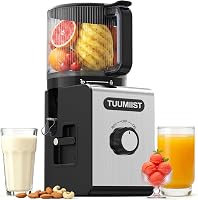
The slow machines in this matchup press at low speed. The EanOruus 3-in-1 Cold Press Juicer uses a 250 watt AC motor and a 6.5-inch chute, while the TUUMIIST runs a 350 watt motor with touch controls.
That low speed is the whole point of a cold press juicer. It crushes fibrous produce slowly, which keeps the juice cooler and leaves less liquid in the pulp.
The two families side by side
| Feature | Fast centrifugal (Hamilton Beach, Juilist) | Slow cold press (EanOruus, TUUMIIST) |
|---|---|---|
| How it works | Spins a cutting disc at high speed | Presses produce with a slow auger |
| Speed to a glass | Seconds for soft fruit | Slower feed, longer batches |
| Chute size here | 3 in | 6.5 in |
| Best produce | Apples, carrots, oranges | Leafy greens, wheatgrass, soft fruit |
| Juice texture | Thin, foamy, separates fast | Denser, holds together longer |
| Motor power here | 800 watts | 250 to 350 watts |
| Cleaning | Dishwasher-safe parts on both fast models | More parts, hand wash on the EanOruus |
The chute gap matters more than the wattage gap for most buyers. A 3-inch chute fits whole apples and celery bunches, while a 6.5-inch chute swallows larger fruit without a pusher.
How does the slow juicer vs fast juicer speed gap change your morning?
A fast juicer wins on time: the Hamilton Beach and Juilist move produce in seconds. A slow juicer needs more patience because the auger presses at a measured pace.
The Juilist runs a max 800 watts, and Juilist says it can juice fruit and vegetables within 8 seconds. That short cycle suits anyone who grabs a glass on the way out the door.
Slow models trade that speed for control. The EanOruus runs a 250 watt high-torque motor and the TUUMIIST a 350 watt motor, both designed to crush fibrous ingredients without racing.
The practical difference shows up in a full batch. A fast juicer clears a breakfast glass while a slow one is still feeding the first apple through the chute.
When speed should decide the purchase
If you juice most weekdays and time is short, the speed gap decides it. A fast juicer gets you out the door with a glass instead of a half-loaded machine.
If you juice on weekends and treat it as a ritual, the slower pace rarely bothers anyone. You load the hopper and let it run while you tidy the kitchen.
The Juilist adds three speeds plus pulse, so soft fruit and hard carrots each get a fitting pace. That flexibility helps when your produce mix changes daily.
Which machine handles whole fruit and leafy greens better?
Fast juicers handle whole fruit and hard vegetables better, while slow juicers press leafy greens and wheatgrass more thoroughly. The chute size decides how much prep you do first.
The Hamilton Beach's 3-inch Big Mouth chute fits a whole apple, a bunch of celery or a handful of carrots. The Juilist matches it with a 3-inch wide mouth on a compact body.
The slow pair go wider. Both the EanOruus and TUUMIIST use a 6.5-inch chute that takes whole apples and celery without chopping.
That's the biggest time saver on the slow side.
Leafy greens tell a different story. Fast machines spin light leaves into the pulp bin, while a slow auger presses them against a strainer and squeezes more out.
For kale and wheatgrass, the slow pair earns its keep.
How to feed each type
- Fast juicers: drop whole fruit and hard vegetables in, then push soft produce gently to avoid clogging the disc.
- Slow juicers: alternate leafy bunches with a harder item like carrot or apple to keep the auger moving.
- Either type: cut fibrous stalks into shorter lengths if the motor slows.
The EanOruus adds two interchangeable strainers, one for juice and one for sorbet. The TUUMIIST builds juice, nut milk and sorbet into its touch panel.
Those extras give the slow pair more uses than straight juicing.
Our slow masticating juicer picks cover models built around greens and nut milk if that's your main goal.
How does juice texture differ between the two?
Fast juicers make thin, foamy juice that separates within minutes, while slow juicers produce denser juice that holds together longer. The difference comes from how much air and heat each process adds.
A centrifugal machine spins a cutting disc at high speed. That whips air into the liquid and warms it slightly, so foam rises and the juice splits into layers soon after pouring.
TUUMIIST says its cold press method mimics hand-squeezing and extracts up to 95% yield with bone-dry pulp. The EanOruus uses a high-torque AC motor to crush fibrous ingredients at low speed.
If you drink juice right away, the texture gap is minor. If you pour a glass and come back an hour later, the fast juicer's juice needs a stir while the slow juicer's looks closer to when it was poured.
Which texture suits which drink
Soft fruit juice from a slow press tastes thicker and keeps its color longer. Carrot and apple juice from a fast machine comes out bright and light, which many people prefer for a quick breakfast drink.
Wheatgrass and green juice belong on the slow side. The pressing action extracts more from light leaves and leaves the pulp drier.
Hard produce like beets and carrots works on either type. A fast juicer moves them quickly and a slow juicer presses them thoroughly, so the choice comes back to time and texture preference.
Which is easier to clean and maintain?
Both types need a rinse and a brush, but fast juicers with dishwasher-safe parts are quicker to finish. Slow juicers have more components, so cleanup takes longer unless the model lists dishwasher-safe pieces.
The Hamilton Beach has dishwasher-safe removable parts for the pulp bin, juice bowl, lid and pusher. It also includes a strainer cleaning brush for the mesh.
The Juilist follows the same pattern with dishwasher-safe accessories and a brush for its filter. Both fast machines reward a quick rinse before the pulp dries.
The EanOruus is hand wash only, so every part needs sink time. Its detachable pulp outlet helps, but the strainer and auger still take brushing.
The TUUMIIST advertises a 3-minute rinse with a simplified three-part assembly and dishwasher-safe parts. That makes it the easiest of the slow pair to keep clean.
Keep the strainer clear
The mesh strainer is where both types slow down. Rinse it under warm water as soon as juicing ends, before pulp hardens in the holes.
Use the included brush rather than a scouring pad. A soft brush clears the mesh without bending it, and it keeps the juice flowing at full speed next time.
For slow models, run a cup of water through the auger at the end to flush the chamber. It takes seconds and saves scrubbing later.
Which juicer suits your counter and your kitchen?
Fast centrifugal machines are compact and fit small counters, while slow models take more room and weigh more. Measure your counter before you buy.
The Juilist measures 12.09 x 10.14 x 5.85 inches, so it's the smallest body in this matchup. The Hamilton Beach is larger at 11.5 x 7.8 x 14.4 inches and weighs 3800 g.
The EanOruus measures 13.7 x 7.48 x 17.4 inches and weighs 12.1 pounds, making it the tallest unit here. The TUUMIIST measures 16.92 x 7.59 x 13.58 inches and weighs 10 pounds.
Height matters if you have upper cabinets. The EanOruus needs about 17 inches of clearance, so check the gap above your counter before ordering.
Capacity and batch size
The Hamilton Beach includes an 80 oz pulp bin, so a long juicing session means fewer trips to empty it. The Juilist lists a 400 ml capacity, which suits single servings but fills quickly in a family batch.
Both slow models list a 100 oz hopper or pitcher. That size lets you load produce for several glasses in one go, which suits meal preppers and larger households.
The TUUMIIST adds auto-shutoff for hands-free batches. The EanOruus adds auto-reverse to clear jams without stopping the machine.
Which type is quieter and safer to run?
Slow juicers run much quieter than fast centrifugal machines. The low-speed auger makes far less noise than a spinning cutting disc.
The TUUMIIST lists a quiet motor under 60 dB, so you can juice before the household wakes. The EanOruus runs a whisper-quiet AC motor for the same reason.
Fast machines are louder because of the spinning action. That's fine in a busy kitchen but less welcome in a small apartment at 6 a.m.
Safety features differ too. The Juilist lists automatic overheat protection and a double safety lock plus a non-slip base.
The Hamilton Beach adds a 3-year limited warranty from a brand that calls itself America's #1 juice extractor brand.
Check the small safety details
Look for a safety lock that stops the machine when the lid lifts. Both fast models here list one, and it matters when kids are in the kitchen.
The slow pair both list overheat protection. That's useful when pressing tough fibrous produce in a long session.
Wipe the base and keep the cord away from the sink. A non-slip base like the Juilist's keeps the machine steady during a fast spin.
Who should buy each type?
Buy a fast juicer if you juice on weekday mornings and want a glass in seconds. Buy a slow juicer if greens and wheatgrass are regulars and you don't mind a slower batch.
The Canoly vs EanOruus comparison covers another cold press option if you're leaning slow. The Ninja vs AMZCHEF juicer face-off covers more fast machines.
Pick a fast juicer if:
- You juice most mornings and time is the deciding factor.
- Your produce is mostly apples, carrots, oranges and celery.
- You want dishwasher-safe parts and an easy rinse.
- Your counter is short on space and you want a compact body.
The Hamilton Beach is the best fit for most of those buyers. It takes whole fruit, holds a large pulp bin and runs dishwasher-safe parts.
The Juilist suits smaller kitchens with its compact body and three speeds.
Pick a slow juicer if:
- You juice leafy greens and wheatgrass regularly.
- You want drier pulp and cooler juice.
- You prefer a quiet machine for early mornings.
- You want sorbet or nut milk from the same unit.
The EanOruus suits bulk batches with its 100 oz hopper and 6.5-inch chute. The TUUMIIST suits quiet early juicing with its touch controls, auto-reverse and sub-60 dB motor.
Verdict: which juicer fits your routine?
For most readers, the Hamilton Beach Centrifugal Juicer Machine With Big wins this slow juicer vs fast juicer matchup. Its 3-inch chute, 800 watt motor and dishwasher-safe parts fit the weekday morning most people actually juice.
Choose a slow juicer instead when greens, wheatgrass and quiet early batches matter more than speed. The EanOruus is the bulk cold press pick and the TUUMIIST is the quiet one.
The fast juicers here are easier to clean and quicker to a glass. The slow pair handles leafy produce better and leaves drier pulp.
That's the trade, and your produce mix decides which side you land on.
If you're still weighing the technology, the cold press juicer vs centrifugal guide goes deeper. And if cold press is your call, the slow masticating juicer roundup has more models to compare.
Frequently asked questions
Is a slow juicer better than a fast juicer?
A slow juicer gives drier pulp and cooler juice, while a fast centrifugal juicer finishes a glass in seconds and takes whole fruit through a wide chute. Pick slow for nutrient-minded daily juicing and fast for rushed mornings.
Does a slow juicer really make more juice?
Slow masticating juicers press rather than spin, so they often leave drier pulp and squeeze more liquid from leafy greens and soft fruit. Fast juicers still do well with hard produce like apples and carrots, where their speed moves a lot of material quickly.
Why does fast juicer juice separate so quickly?
A centrifugal juicer spins the produce at high speed, which whips air into the liquid and warms it slightly. That makes the juice separate and foam sooner, so drink it within a few hours or stir it before pouring.
Can a slow juicer handle leafy greens and wheatgrass?
Yes. Slow masticating juicers press leafy greens and wheatgrass more effectively than fast machines, which tend to fling light leaves into the pulp bin.
Feed greens in small bunches between harder items to keep the auger moving.
How long does cleanup take on each type?
Fast juicers with dishwasher-safe parts rinse quickly and load straight into the rack. Slow juicers have more parts, including a strainer and auger, so expect more hand washing unless the model lists dishwasher-safe pieces.
Which juicer is quieter in the morning?
Slow juicers run on a low-torque motor and are much quieter than centrifugal machines, which spin a cutting disc at high speed. A slow model suits early juicing in a small home or apartment.