Hurom vs Nama Juicers: Which Fits Your Kitchen? (November 2026)
The Hurom vs Nama juicer call usually comes down to prep time and counter depth. Pick the Nama-style wide-chute design if you want whole fruit in with less chopping; pick the classic Hurom-style slow juicer if a small footprint and simple pulp control matter more.
On this page (9 sections)
- Hurom vs Nama juicers: which one fits your kitchen?
- Chute size decides how much prep you do
- Footprint and height: will it fit your counter?
- Batch size and hopper capacity
- Pulp control and the texture of your juice
- Motor, speed and how the juice comes out
- Cleanup and care after juicing
- Produce each machine handles best
- Which juicer should you buy?
The Hurom vs Nama juicer decision usually comes down to prep time versus counter space. Pick the Nama-style wide-chute design if you want whole fruit in with less chopping; pick the compact slow juicer if a small footprint and simple pulp control matter more.
That hurom vs nama juicer question hides a real split. Nama-style machines push a wide feed chute and a big hopper, so you spend less time at the knife block.
Hurom-style slow juicers keep the frame small and the pulp options simple. Both make cold press juice; they just ask different things of your kitchen.
This comparison works through the practical differences: chute width, footprint, batch size, pulp control and cleanup. Two slow juicers carry the slow-juicing side, and two faster machines show when the slow route is more effort than it's worth.
 Best for citrus-only mornings
Elite Gourmet 24 oz Electric Citrus Juicer
 Best for speed and big-mouth feeding
Hamilton Beach Centrifugal Juicer Machine With Big
Hurom vs Nama juicers: which one fits your kitchen?
The Nama-style wide-chute juicer fits a kitchen with counter room and a family-sized juicing habit; the compact slow juicer fits a tight counter and smaller batches. Measure your counter depth and cabinet clearance before you fall for a big hopper.
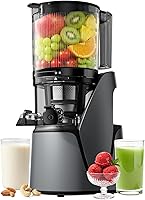
The EanOruus 3-in-1 is the Nama-style stand-in here. Its 6.5-inch feed chute and 100 oz hopper are built for loading whole apples and oranges and running a batch for several days.
It stands 17.4 inches tall and 13.7 inches deep.
The Ninja NeverClog JC151 is the compact counter. At 15.93 inches tall and 12.11 inches deep, it's made to slide under kitchen cabinets.
It runs a 24 oz juice jug and a 36 oz pulp container, which suits one or two glasses at a time.
If your counter is shallow or your cabinets hang low, the smaller machine wins before any juicing starts. If you have the room and hate chopping, the wide chute earns its space.
Chute size decides how much prep you do
A 6.5-inch chute takes whole fruit; a 3-inch chute takes whole apples and celery bunches; a narrow feed needs cutting. Prep time is the biggest day-to-day gap between these machines.
The EanOruus chute is the widest at 6.5 inches. Whole apples and oranges drop in without a knife, and the wide feed is built for hands-free loading.
That's the single strongest reason to choose a Nama-style juicer.
The Hamilton Beach Big Mouth runs a 3-inch chute. That still fits a whole apple, a bunch of celery or a handful of carrots, so it skips most pre-cutting too.
It just needs smaller pieces than the EanOruus.
The Ninja JC151 has a narrower slow-juice feed. Expect to quarter apples and trim long greens before they go in.
The trade is a smaller machine that stores easily.
If you juice three or four times a week, the chopping adds up fast. If you juice once on a weekend, a narrower feed costs you a few minutes and little else.
For the broader slow versus fast choice, our cold press juicer vs centrifugal guide lays out the trade-offs.
Footprint and height: will it fit your counter?
The compact Ninja is the only one here built to sit under standard cabinets; the EanOruus needs more headroom. Height matters more than most people expect, because a juicer you have to store in a closet rarely gets used.
The Ninja JC151 measures 15.93 inches tall, 12.11 inches deep and 7.15 inches wide. It's the smallest slow juicer of the group and the easiest to leave out on the counter.
The EanOruus 3-in-1 measures 17.4 inches tall, 13.7 inches deep and 7.48 inches wide. It's still a countertop machine, but the extra height and depth need checking against your over-counter space.
The Hamilton Beach Big Mouth stands 14.4 inches tall, 11.5 inches deep and 7.8 inches wide. That's shorter than the Ninja, though its 800W base makes it bulkier in feel.
The Elite Gourmet citrus juicer is the smallest by far at 7.68 inches tall and 7.28 inches deep. It's a reamer on a small base, so it fits almost anywhere.
Measure from the counter to the underside of your cabinets, then add a couple of inches for lifting the lid or feed. A juicer that clears by half an inch is a daily annoyance.
Batch size and hopper capacity
The EanOruus 100 oz hopper holds a multi-day batch; the Ninja and Hamilton Beach suit one sitting; the Elite Gourmet makes about 3 cups of citrus juice. Pick the capacity around how much you drink before the juice goes flat.
The EanOruus hopper is built for meal preppers and large families. It lets you load ingredients for several days at once and refill less often.
That's the practical payoff of a big Nama-style frame.
The Ninja JC151 runs a 24 oz juice jug with a 36 oz pulp container. That's a comfortable batch for two people, and the separate pulp bin means you aren't stopping to empty it mid-run.
The Hamilton Beach Big Mouth carries an 80 oz pulp bin. The pulp bin is large, so a long juice session won't fill it quickly, though the juice bowl is smaller than the pulp bin.
The Elite Gourmet holds 24 oz, about 3 cups. That's 2 to 3 servings of orange or grapefruit juice, which is exactly what a citrus juicer should do.
Fresh juice loses flavor as it sits. If you drink one glass a day, a small jug is enough and a giant hopper just means more cleaning.
If you juice for the week, the big hopper earns its keep.
Pulp control and the texture of your juice
The Ninja gives you two pulp filters; the Elite Gourmet gives you a strainer; the wide-chute machines give you one juice result. Texture is where the compact slow juicer punches above its size.
The Ninja JC151 ships with two interchangeable pulp filters, one for less pulp and one for lots of pulp. You choose smooth or thick, and the choice is repeatable glass after glass.
That's more control than any other machine here.
The Elite Gourmet uses a built-in pulp and seed filter. It separates seeds and reduces excess pulp so the juice pours smoother.
You don't swap anything; the strainer just sits in the container.
The EanOruus uses two strainers, one for juice and one for sorbet. The sorbet strainer turns frozen fruit into a dessert texture, and the company lists a separate setup for nut milk too.
The Hamilton Beach Big Mouth is a centrifugal machine. It extracts fast and leaves a lighter, more aerated juice, with no pulp dial to adjust.
Our Canoly vs EanOruus comparison shows how 3-in-1 strainers change the job a juicer can do.
Motor, speed and how the juice comes out
The slow juicers run low-speed augers for a denser juice; the centrifugal Hamilton Beach spins fast for speed over texture. The motor tells you what the machine is built to do.
The EanOruus runs a 250W AC brushless motor. EanOruus says it crushes hard fibrous ingredients and is built for heavy daily use.
A brushless AC motor is the heavy-duty end of the slow-juice range.
The Ninja JC151 runs a 150W high-torque motor at low speed. The low speed is the cold press idea: it minimizes foam and clogging, and the reverse program helps clear jams.
It's a lighter motor than the EanOruus, which shows on dense produce.
The Hamilton Beach Big Mouth runs 800W. That's the highest power here, and it's what lets a centrifugal juicer move through hard and soft produce in seconds.
The cost is heat and foam in the glass.
The Elite Gourmet runs 40W with an auto-reversing reamer. It's built for soft citrus only, and the dual-direction rotation helps pull more juice from each orange.
Power isn't the whole story. An 800W centrifugal juicer is fast but rough on texture; a 150W slow juicer is patient but gentle.
Pick by the glass you want, then check the motor can handle your usual produce.
Cleanup and care after juicing
The Ninja is the easiest to clean here because its juice-contact parts are dishwasher safe; the EanOruus asks for hand washing. Cleanup decides whether a juicer stays on the counter or moves to the cupboard.
The Ninja JC151 lists all juice-contact parts as dishwasher safe. The anti-drip lever also helps: you can pause juicing and pour without a mess on the counter.
Fewer parts and a dishwasher cycle make it the low-effort option.
The EanOruus 3-in-1 lists hand wash only for its detachable parts. It has a detachable pulp outlet that makes emptying simpler, but you'll still be at the sink with a brush.
The Hamilton Beach Big Mouth includes a strainer cleaning brush, and its pulp bin, juice bowl, lid and pusher are all dishwasher safe. That's a real convenience for a machine that processes a lot of produce.
The Elite Gourmet's removable parts are top-rack dishwasher safe, though the maker recommends hand washing for the longest product life. With only a few parts, it's a quick job either way.
If you juice daily, put dishwasher-safe parts near the top of your list. If you juice occasionally, a hand-wash machine is a small chore.
For more on keeping a slow juicer running, see our Ninja vs AMZCHEF matchup.
Produce each machine handles best
Slow juicers handle leafy greens, ginger and fibrous produce; a centrifugal machine favors hard fruit and volume; a citrus reamer does citrus only. Match the machine to what actually goes in your fridge.
The EanOruus is built for fibrous, dense produce and whole fruit. Its 6.5-inch chute takes apples and oranges uncut, and the brushless motor is rated for hard ingredients.
It's the strongest choice for green juice and root vegetables in volume.
The Ninja JC151 is designed for tough produce like apples, carrots, celery and leafy greens without clogging. Ninja says it powers through them for smooth cold press juice.
Its smaller motor means it's better for daily small batches than marathon sessions.
The Hamilton Beach Big Mouth juices oranges and apples as readily as cucumbers and leafy greens. The 3-inch chute and 800W motor make it a volume machine for mixed produce.
It's the fast pick when you want a pitcher of juice before work.
The Elite Gourmet does oranges, lemons, limes and grapefruit. It won't touch kale or carrots.
If your juice is always citrus, it's the simplest tool for the job. If you want one machine for everything, skip it.
Which juicer should you buy?
For most kitchens, the Elite Gourmet 24 oz Electric Citrus Juicer is our top pick and the highest score here; the EanOruus 3-in-1 is the wide-chute Nama-style choice when counter room allows. The hurom vs nama juicer choice leans to the wide-chute design for whole fruit and volume.
Choose the Elite Gourmet citrus juicer if citrus is the whole job. It's compact, simple to run and easy to store, and it won't replace a vegetable juicer.
That's the top pick for most kitchens.
Choose the EanOruus 3-in-1 if you juice whole fruit, make green juice or nut milk, and want fewer refills. The wide chute and big hopper are the reasons.
Accept the hand wash and the larger footprint as the price.
Choose the Ninja NeverClog JC151 if your counter is tight and you want pulp control without a big machine. It fits under cabinets, cleans in the dishwasher and gives you two pulp filters.
It's the better fit for small kitchens and two-person batches.
Choose the Hamilton Beach Big Mouth if speed matters more than texture. The 800W motor and 3-inch chute make quick work of a full fridge drawer.
The foam and heat are the trade.
If you're still weighing the bigger category question, our Nama J2 vs Hurom H400 comparison covers the two flagship slow juicers directly. The hurom vs nama juicer answer doesn't change with the model name: prep time and counter space decide it.
Our score weighs specs, features and buyer feedback against what you're shopping for. The Elite Gourmet leads on score for citrus mornings, the EanOruus leads on capacity and chute width for big batches.
Pick the citrus reamer for citrus-only mornings, the smaller Ninja if your kitchen is the constraint, and the wide-chute design when your juicing habit is the bigger one.
Frequently asked questions
Is a Hurom or Nama juicer better for leafy greens?
A slow juicer handles leafy greens better than a centrifugal one, so both the Hurom-style and Nama-style machines suit kale and spinach. The wide-chute Nama design saves prep time, while a compact slow juicer is easier to store.
Do I need to cut fruit for a wide-chute slow juicer?
A 6.5-inch chute takes whole apples and oranges, so most fruit goes in uncut. Fibrous items like long celery stalks still need trimming to fit the feed opening.
Can a slow juicer make nut milk?
Only if it ships with a suitable strainer. The EanOruus 3-in-1 includes a strainer for nut milk and sorbet, while the Ninja JC151 is set up for juice and pulp control rather than dairy alternatives.
Which is easier to clean, a Hurom-style or Nama-style juicer?
The Ninja JC151 has dishwasher-safe juice-contact parts, which shortens cleanup. The EanOruus lists hand wash only for its detachable parts, so it takes more sink time.
Will a slow juicer fit under kitchen cabinets?
Check the height first. The Ninja JC151 measures 15.93 inches tall and is built to sit under most cabinets, while the EanOruus stands 17.4 inches tall and needs more headroom.